
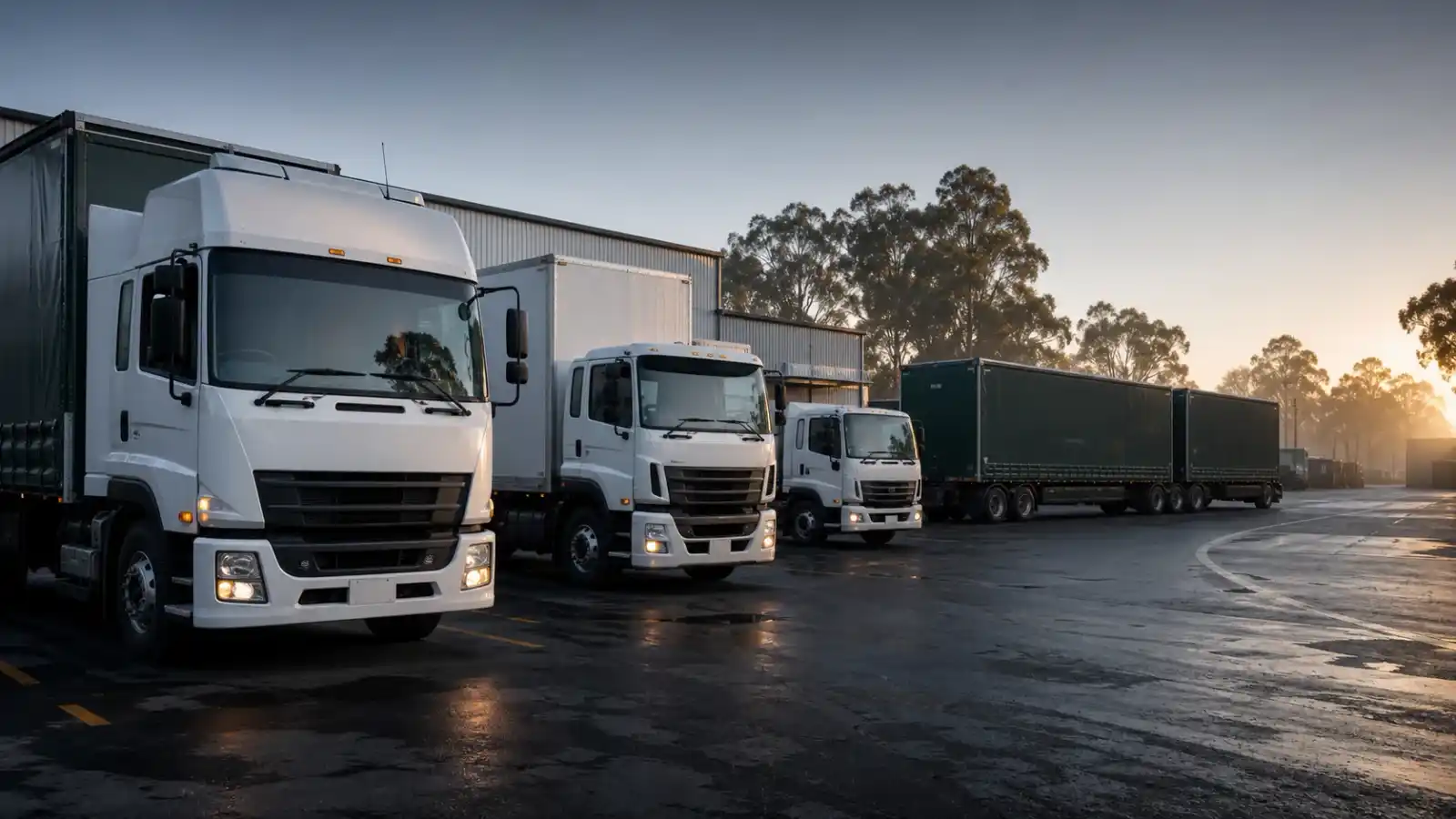
Rigid Truck Insurance
Rigid is a chassis description, not a risk description. The body on the back and the work in the diary are what actually get underwritten.
Multiple
Insurers compared
AU wide
Placement and claims support
Broker
Led cover design
Recognition

Rigid truck insurance is commercial motor cover shaped by the body and the use: a pantech doing metro multi-drop, a curtainsider on regional freight, a refrigerated body in cold chain and a crane-mounted table top on construction deliveries are four different risks sharing one chassis type. The policy should be matched to the body, the fitted equipment and the work, not to the word rigid.
Licence classes run from light rigid to heavy rigid, and fitted equipment like tailgate loaders and cranes changes both the value and the liability profile. If your rigid work is really one of the specialist configurations, the dedicated guides go deeper: refrigerated, tipper and tow truck insurance, all part of the truck insurance hub.
One chassis, many businesses
Rigid trucks are the general workforce of Australian road transport: light rigids doing urban deliveries, medium rigids on trades and regional freight, heavy rigids carrying cranes, tippers and specialist bodies. Because the category is broad, the underwriting weight falls on the specifics. What body is fitted? What equipment is mounted? Who drives it, on what licence class, doing what runs?
Urban multi-drop work concentrates a particular pattern: frequent stops, reversing in tight docks and driveways, pedestrians and parked cars, tailgate loader operation at the kerb. None of it is exotic, and all of it accumulates. Insurers price metro delivery on frequency of exposure, and reward operators who can show driver standards and low incident rates.
Mounted equipment moves the risk again. A tailgate loader is a machine operating in public space; a crane turns the truck into lifting plant with its own liability profile, and crane work near powerlines or over neighbouring property raises questions the base motor policy was never designed to answer. Equipment must be itemised in the values and the use disclosed, with liability arranged to match.
What rigid truck insurance can cover
The chassis, the body, the mounted equipment and the work each shape the program. This is the typical split.
Usually covered
- Accident damage, fire and theft for the truck and fitted body
- Tailgate loaders, cranes and fitted equipment, where itemised
- Third-party property damage caused by the vehicle
- Windscreen, glass and signage on the body
- Towing and recovery after an insured incident
Needs its own section
- Goods carried, which sits in the goods in transit section
- Crane lifting operations liability, which may need its own arrangement
- Equipment breakdown without an external insured event
- Public liability for the wider business beyond the vehicle
- Workers compensation, which sits in the state scheme
Indicative only. The treatment of fitted equipment and crane operation differs by insurer, and it needs to be disclosed explicitly on rigid placements.
Rigid is the chassis. The risk is the configuration
Tell us the body, the equipment and the work. We will place the truck you actually run, not the label on the form.
Where rigid trucks get hurt
Three ordinary working days for three different rigid configurations.
Dock strike on a multi-drop run
Reversing into a tight loading dock mid-route, the pantech clips the dock structure and an awning. Minor damage, third-party property claim, and the fourth similar incident across the fleet this year. Frequency is the story metro insurers read first, and driver standards are the answer they want to see.
Tailgate loader incident at the kerb
A pallet comes off the tailgate loader on a sloped street, damaging a parked car and injuring no one by luck. The equipment, its maintenance and the operator's procedure become the claim file. Loaders are machines in public space and are underwritten as such.
Crane truck near the boundary
A crane-mounted rigid lifting roof trusses swings load over a neighbouring property and contacts a service line. The motor policy, the crane's plant cover and public liability all have a stake, and the boundaries between them decide how cleanly the claim runs. Crane use disclosed at placement is what makes those boundaries clean.
What underwriters look for
Rigid submissions live or die on configuration detail. Expect questions on:
- Body type and fitted equipment: pantech, curtain, fridge, tipper body, tailgate loader, crane, itemised with values
- The work: metro multi-drop, regional freight, trades, construction deliveries
- Licence classes and driver profile across who actually drives the truck
- Radius and run patterns
- Where it parks overnight: depot, yard or street
- Claims history, with frequency patterns explained
The rigid category is where lazy occupation labels cost the most, in premium or in cover. Describing the actual configuration is the entire game.
How Tank places this risk
A short conversation beats a long form. We build the submission so underwriters can price the risk you actually run, not the occupation label.
Describe the operation
The truck, the body, the mounted equipment and the real work. Configuration detail is the submission.
We approach the market
We match the risk to insurers whose appetite fits your configuration, from metro delivery to crane-fitted heavy rigids.
Compare and decide
You compare options with the equipment and use questions already answered in the wording, not discovered at claim time.
Check the rules where the work is performed
Road transport and safety duties sit outside your insurance policy. These regulator sources are the starting point.
External government sources. Tank Insurance is not responsible for their content; confirm current requirements with the relevant regulator.
More truck insurance guides
Questions about rigid truck insurance
Australian licence classes step up through light rigid, medium rigid and heavy rigid based on gross vehicle mass and axles. Which class each driver holds matters to your insurer as well as the law: the driver profile across the fleet is standard underwriting information, so keep licence classes current and matched to the vehicles driven.
Fitted equipment may be covered where it is itemised in the sum insured, its use is disclosed and the wording includes it. A crane also creates lifting liability that may need a separate arrangement beyond the motor policy. Confirm both the equipment damage and operating liability sections.
Not automatically. Commercial motor addresses the insured vehicle and disclosed fitted equipment; freight generally needs a separate goods in transit section sized to the loads carried. A single incident can engage both sections, subject to their separate terms and limits.
The commercial motor structure may apply, but refrigerated work adds the cold-chain layer: the fridge unit must be disclosed and any deterioration extension must be specifically selected and meet its conditions. Our refrigerated truck insurance guide explains the separate cover questions.
Premium reflects the truck and body value, fitted equipment, the work and radius, driver profile, overnight parking and claims history. A metro multi-drop pantech and a crane-fitted heavy rigid price very differently. We quote from your actual configuration rather than publishing averages.
Put your transport risk in front of the right markets
Tell us what you run, what it carries and where it travels. We will explain the available terms and exclusions before you decide.