
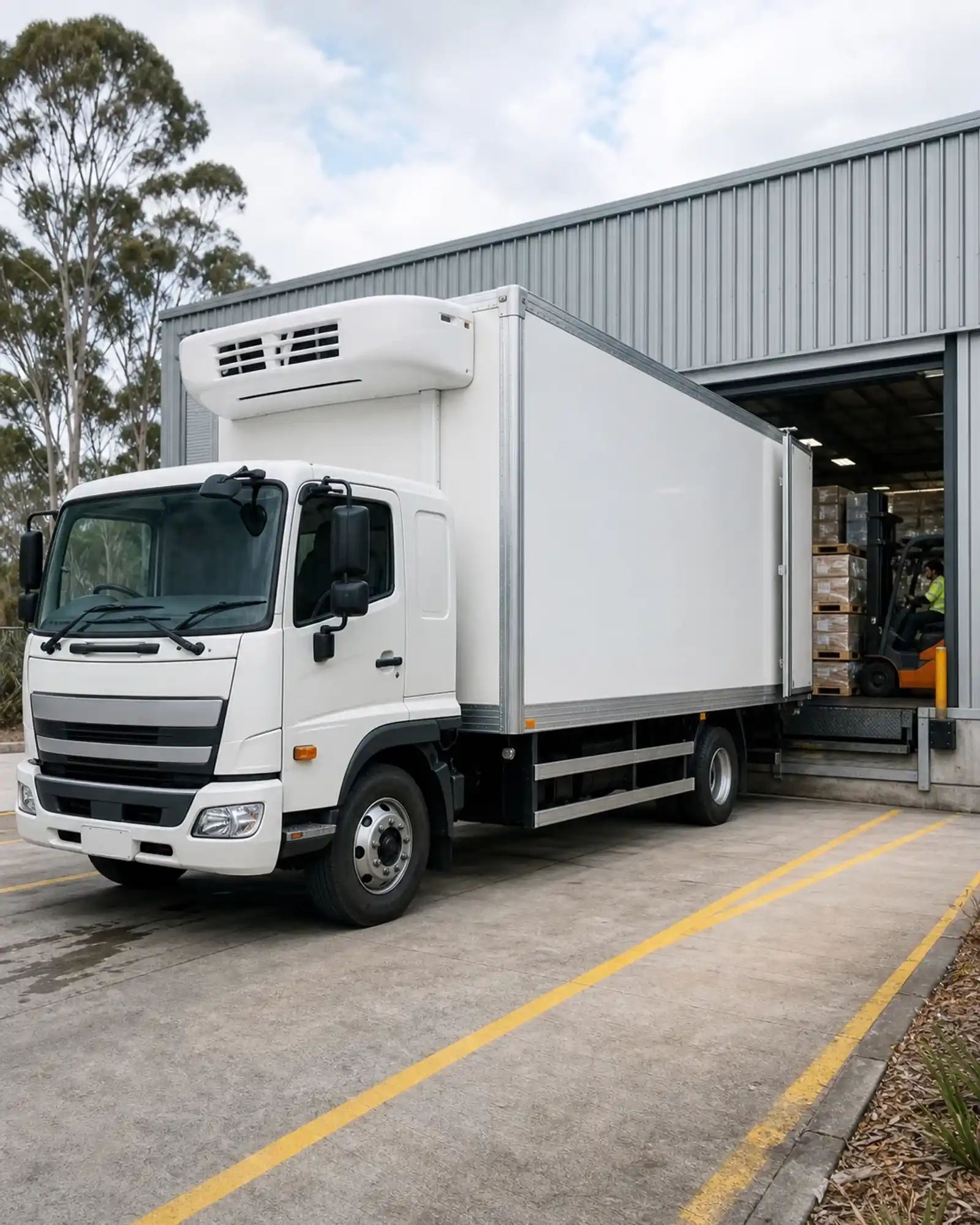
Refrigerated Truck Insurance
In cold chain, the load can die while the truck is fine. The program has to cover the fridge unit and the freight, not just the accident.
Multiple
Insurers compared
AU wide
Placement and claims support
Broker
Led cover design
Recognition

Refrigerated truck insurance can combine commercial motor cover for the disclosed vehicle and fridge unit with goods in transit cover that may extend to deterioration of refrigerated cargo. Standard transit wordings can exclude spoilage caused by refrigeration breakdown unless a suitable extension is selected and its conditions are met.
The fridge unit itself is a high-value, hard-working asset that needs to be inside the sum insured, and its maintenance records are underwriting currency. See the truck insurance hub for the wider cover stack, or fleet insurance if you run multiple refrigerated units. The two refrigerated vehicles case study shows what two units cost a hospitality group on market and agreed value bases after three insurers declined.
Cold chain fails quietly
Most truck losses announce themselves: a collision, a theft, a rollover. Cold-chain losses can happen in silence. A fridge motor stops overnight, a door seal fails on a long leg, a sensor drifts, and a full load of meat, produce or pharmaceuticals crosses a temperature threshold it can never come back from. The truck is undamaged. The loss is total.
That is why refrigerated transport needs its own insurance architecture. A commercial motor policy may include the disclosed truck and fridge unit, subject to the schedule and wording. Freight requires a separate goods in transit review and may need a deterioration or refrigeration breakdown extension, because spoilage without an accident is commonly excluded from standard transit wording.
The stakes rise with what you carry. Where a food-service contract holds the carrier responsible for rejected loads, the exposure follows the contract, and pharmaceutical freight can carry values that dwarf the vehicle. A transit limit set on last year's average load, rather than the real value of a full one, caps any recovery at the wrong number.
What refrigerated truck insurance can cover
The vehicle, the fridge unit and the freight are three different assets with three different failure modes. This is the typical split.
Usually covered
- Accident damage, fire and theft for the truck and fitted fridge unit
- Third-party property damage caused by the vehicle
- Goods in transit cover for carried freight, where arranged
- Deterioration of cargo from refrigeration breakdown, where the extension is taken
- Towing, recovery and load transfer after an insured incident
Needs its own section
- Spoilage from breakdown where no deterioration extension was arranged
- Gradual temperature drift from poor maintenance or seal wear
- Public and products liability for delivered goods
- Downtime or loss of contract income while the unit is repaired
- Freight rejected for documentation rather than temperature reasons
Indicative only. Deterioration extensions differ meaningfully between insurers on triggers, sub-limits and maintenance conditions. Read the wording before relying on it.
The load can die while the truck is fine. Cover both
Tell us your units, your freight and your full-load values. We will put the deterioration question to insurers who actually answer it.
How cold-chain losses actually happen
Three ways a refrigerated operator loses money, and the section of the program each one tests.
Fridge failure on an overnight leg
The fridge motor fails four hours into an interstate run. The driver finds the alarm at the next stop, but the load has already breached temperature. The truck is fine; the freight is written off. Without a deterioration extension on the transit cover, this loss lands on the operator.
Rejected load at the dock
A receiver's probe reads the load above specification and rejects the delivery in full. The dispute turns on temperature records, maintenance history and the contract's rejection clause. Good telematics and calibrated records are both a defence and an underwriting asset.
Collision with load transfer
A collision disables the truck with a full chilled load aboard. The clock starts immediately: the load needs a rescue vehicle before it breaches. Whether load transfer and salvage costs are covered, and how fast the insurer authorises them, decides if one loss becomes two.
What underwriters look for
Refrigerated risks are priced on the freight and the discipline around it. Expect questions on:
- What you carry: produce, meat, dairy, seafood or pharmaceuticals, each with its own value and sensitivity profile
- Full-load values, so the transit limit reflects a real load, not an average one
- Fridge unit age and maintenance, with service records
- Temperature monitoring: telemetry, alarms and record keeping
- Radius and run patterns: metro multi-drop and linehaul carry different exposure
- Claims and rejection history, including near misses
Operators who can show monitored, documented cold chain get better answers from the market. The same records that defend a rejected-load dispute also earn sharper terms.
How Tank places this risk
A short conversation beats a long form. We build the submission so underwriters can price the risk you actually run, not the occupation label.
Describe the operation
Vehicles, fridge units, what you carry and full-load values. The freight detail matters as much as the truck detail.
We approach the market
We approach insurers with real cold-chain appetite and put the deterioration extension question to them explicitly.
Compare and decide
You compare options knowing exactly what each wording does when the fridge fails and the truck did not crash.
Check the rules where the work is performed
Road transport and safety duties sit outside your insurance policy. These regulator sources are the starting point.
External government sources. Tank Insurance is not responsible for their content; confirm current requirements with the relevant regulator.
More truck insurance guides
Questions about refrigerated truck insurance
Only if the program includes goods in transit cover with a deterioration or refrigeration breakdown extension. Standard transit wordings can exclude spoilage where there was no accident, and refrigeration failure can produce a total loss with the vehicle undamaged. If you carry perishables, ask specifically whether breakdown-caused deterioration is covered, at what sub-limit, and on what maintenance conditions.
It should be listed as part of the insured vehicle with its value inside the sum insured. Fridge units are expensive, work constantly and are commonly targeted in theft. A sum insured set on the bare vehicle leaves the unit underinsured, so we itemise it in the submission.
Outcomes turn on your records and the contract. Calibrated temperature data and fridge maintenance history are your evidence that the cold chain held. Whether insurance responds depends on the cause of the breach and the wording, which is why we walk refrigerated operators through the rejection scenario before placing cover rather than after a dispute.
The structure is similar but the values and contract terms are usually higher and stricter. Transit limits, deterioration sub-limits and monitoring requirements all need to match the freight profile, and some insurers treat pharmaceutical cargo as a distinct appetite question. Tell us what you carry and we will match the market to it.
Premium reflects the vehicle and fridge unit value, what you carry, full-load values, radius, monitoring discipline and claims history. Refrigerated programs price differently from dry freight because the deterioration exposure sits on top of the motor risk. We quote from your actual profile rather than publishing averages.
Put your transport risk in front of the right markets
Tell us what you run, what it carries and where it travels. We will explain the available terms and exclusions before you decide.