
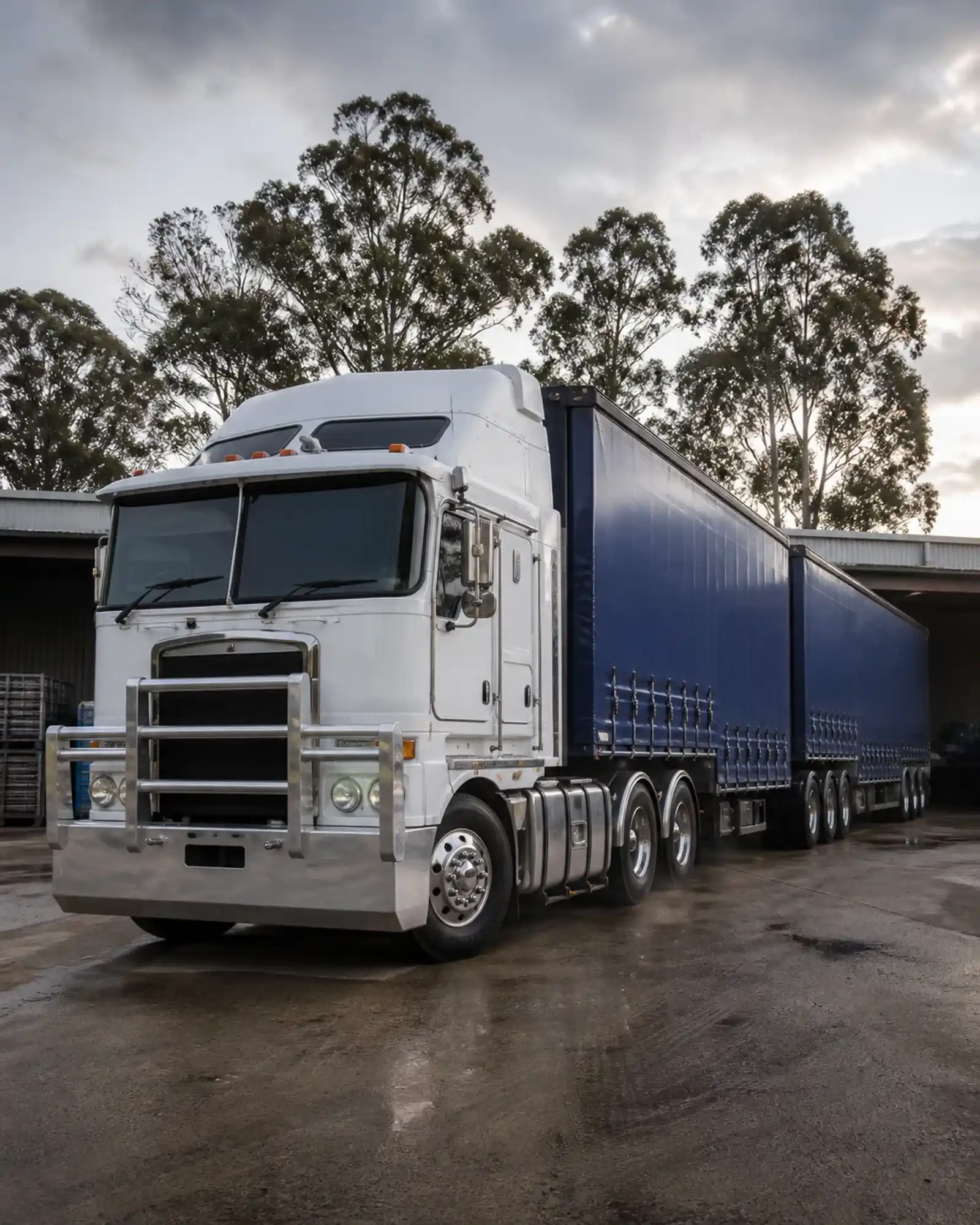
B-Double Insurance
A B-double is a small business rolling at highway speed: prime mover, two trailers and the freight. Insure the combination, not just the truck.
Multiple
Insurers compared
AU wide
Placement and claims support
Broker
Led cover design
Recognition

B-double insurance can cover the scheduled combination, prime mover plus each trailer, with separate goods in transit and liability sections where selected. The values and exposures increase with long-haul running, remote recovery, fatigue obligations and freight contracts, so each asset, route and responsibility must be disclosed.
Underwriters read linehaul risk through the regulatory lens: NHVR accreditation, fatigue management and mass compliance are pricing signals as well as legal duties. See prime mover insurance for the tractor unit on its own, or the truck insurance hub for the wider stack. The owner-driver prime mover renewal case study shows how a single prime mover working a third-party trailer was insured and then remarketed, with trailer-in-control cover carried at renewal.
Distance, mass and the cost of being far away
Linehaul risk is shaped by geography. A combination doing city work is never far from a repairer, a tow and a replacement driver. The same combination on remote legs is hours from all three. When something goes wrong far away, everything costs more: recovery of a loaded combination from a remote roadside is a major logistical exercise, freight has to be rescued and re-delivered, and the vehicle is off the road for longer.
Mass and fatigue regulation sit over all of it. B-double and road train operation runs under the Heavy Vehicle National Law's access, mass and fatigue rules, and insurers treat an operator's compliance systems, work diaries, rosters and any NHVAS accreditation, as a direct read on risk quality. Animal strikes, road trains' long overtaking envelopes and load restraint across multiple trailers complete the picture.
The combination itself is a valuation question. Prime mover and trailers are separate assets that travel together, and the trailer schedule needs the same accuracy as the prime mover's sum insured. Interchanged and borrowed trailers need to be inside the program deliberately; see semi trailer insurance for how trailers are covered in their own right.
What B-double insurance can cover
The combination, the freight and the long-haul liability each need a home. This is the typical split.
Usually covered
- Accident damage, fire and theft for prime mover and scheduled trailers
- Third-party property damage liability
- Recovery, towing and salvage, including remote recovery where arranged
- Goods in transit for the freight, sized to a full combination load
- Downtime or hire options, where arranged
Needs its own section
- Non-owned and interchanged trailers, unless specifically arranged
- Freight liability assumed under contract beyond the transit cover
- Fatigue and mass breaches: fines and penalties are generally uninsurable
- Driver personal effects and accommodation costs, unless extended
- Workers compensation, which sits in the state scheme
Indicative only. Remote recovery limits and trailer provisions differ by insurer, and on linehaul risks they are the clauses most likely to be tested.
Insure the combination and the kilometres around it
Tell us your combinations, corridors and compliance systems. We will make sure the recovery clauses match the map.
What linehaul losses look like
Three incidents, each amplified by distance and mass.
Rollover on a remote leg
A loaded B-double leaves the road at night on a rural highway, hours from the nearest heavy recovery operator. The combination is on its side with freight aboard. Recovery, load salvage and freight rescue become a multi-day operation, and the recovery bill alone tests the policy's limits before repairs start.
Animal strike at speed
A night-time strike takes out the bumper, radiator and steering components. The truck is drivable to nowhere: it needs parts freighted to a regional town and a week off the road. The freight is transferred at cost. Downtime and hire provisions decide how much of the week the operator wears.
Load shift across trailers
Restraint fails in the lead trailer under heavy braking, damaging freight in both trailers and forcing an unplanned unload. The goods in transit section, its limit and its restraint conditions carry the claim; the contract with the freight owner decides the rest.
What underwriters look for
Linehaul submissions are read through compliance and distance. Expect questions on:
- Combination values: prime mover and each trailer, scheduled accurately
- Routes and legs: which corridors, how remote, how often
- Fatigue management: rosters, work diaries and any NHVAS accreditation
- Freight profile and full-load values for the transit cover
- Driver profile: experience on combinations, licence classes and history
- Claims history, with context for any linehaul incidents
An operator who can evidence fatigue and mass systems is showing the insurer exactly the discipline that prevents the class's worst losses. It shows up in the terms.
How Tank places this risk
A short conversation beats a long form. We build the submission so underwriters can price the risk you actually run, not the occupation label.
Describe the operation
The combinations, the routes, the freight and the compliance systems behind them. Accuracy on trailer values included.
We approach the market
We approach insurers with genuine linehaul appetite and stress-test the remote recovery and trailer provisions.
Compare and decide
You compare options knowing what happens 800 kilometres from the depot, not just what the premium is.
Check the rules where the work is performed
Road transport and safety duties sit outside your insurance policy. These regulator sources are the starting point.
External government sources. Tank Insurance is not responsible for their content; confirm current requirements with the relevant regulator.
More truck insurance guides
Questions about b-double insurance
They may be covered where each trailer is correctly scheduled and the relevant section applies. Prime mover and trailers are separate assets with separate values. Borrowed or interchanged trailers need an agreed trailer-in-control or non-owned trailer provision; do not assume they are included.
The structure is the same, covering a combination of prime mover and multiple trailers, but road trains push the variables further: higher combination values, more remote routes, longer recovery distances and specific access conditions. The same program design applies with the limits and provisions sized up to match.
It is a genuine underwriting input. Fatigue management systems, work diary discipline and NHVAS accreditation are read as direct evidence of risk quality on long-haul operations, because fatigue is a recognised regulatory risk factor under the HVNL. Bring the accreditation detail to the submission; it belongs there.
Recovery and towing provisions do the heavy lifting, and on remote routes they are the clauses to scrutinise before buying. Recovering a loaded combination from a remote roadside can be one of the largest components of a claim. Confirm the recovery limits, and whether freight rescue and transfer are addressed, for the routes you actually run.
Premium reflects the combination value, routes and remoteness, freight profile, fatigue and compliance systems, driver profile and claims history. Linehaul prices differently from metro work because distance changes the cost of every incident. We quote from your actual routes and combinations rather than publishing averages.
Put your transport risk in front of the right markets
Tell us what you run, what it carries and where it travels. We will explain the available terms and exclusions before you decide.