

Life Sciences Insurance
Specialist placement support for biotech, medical device, pharmaceutical, consumer chemical and research businesses. We focus on risks that sit outside standard market appetite, from R&D consultancies to $20M product liability programmes.
Specialist
Market Access
$20M
Limits Available
Hard-to-Place
Our Focus
Recognition

Understanding The Product
What Insurance Do Life Sciences Businesses Need in Australia?

Life Sciences Insurance is a catch-all description for the combined cover that businesses in biotech, medical devices, pharmaceutical R&D, laboratories, clinical trials and consumer chemical products typically need to trade safely.
It isn't one policy. It's usually a tailored combination of Professional Indemnity on the advisory side, Public Liability for third-party exposure and Product Liability where a physical product is supplied, distributed, manufactured or hired.
The sector also has its own set of regulatory flags: AICIS registration for industrial chemicals, TGA pathways for therapeutic goods, mandatory safety standards for children's products and overseas supply chains that cross multiple jurisdictions. These are the exact places standard insurers freeze up.
If your business touches any of these areas, a generic business pack is unlikely to respond properly when something goes wrong.
What it has actually cost, from five verified Tank placements: professional indemnity for a scientific and data consultancy at around $900 a year, combined PI and public liability for a biomedical R&D consultant at around $1,900, $20 million public and product liability for a children's products importer at around $1,200, product liability for a new baby skincare brand at around $2,900, and liability on hired devices for a maternity therapeutic device hire business at around $2,800. Each is a historical outcome for that risk, not a quote.
The Team Behind Your Cover
Why Use a Specialist Broker for Life Sciences Insurance?

When a biotech founder or a medical device consultant comes to us with declines behind them, the answer is almost never "you're uninsurable". It's that the submission hasn't reached the right market yet. Our job is to cut through the noise and get the risk in front of an underwriter who actually writes this work.
Life sciences is one of the narrower verticals in the Australian insurance market. Most mainstream insurers don't write it, and appetite for the class is narrow and inconsistent across the market. Many online panels cap limits or refer out on occupation, which leaves founders with no visible path forward.
We have experience across many life sciences, medical consulting and medical product businesses. Placements have spanned biomedical R&D consulting, scientific research and data consultancies, therapeutic medical device distribution, dermatologically tested consumer products and imported children's products. Premiums and limits vary widely, and on the product side we've reached limits of $20M through specialist markets.
Market Reality
Why Do Standard Insurers Decline Life Sciences Businesses?

The clients who get declined
The life sciences clients we most commonly place cover for are sole traders, one and two-person consultancies and early-stage product businesses, typically turning over somewhere between $100k and $300k. Most of them have the same story. A great product or a deep technical background, a handful of real customers or clients lined up, and a stack of insurer declines they can't explain.
Supply chains that cross borders
International supply chains are the norm in this space. Formulation happens in Australia, manufacturing sits overseas, distribution lands in the US, UK or Europe. The standard Australian insurance market doesn't price this well, so founders cycle through quotes before finding a broker who can reach the specialist market.
The gap was market access
We built our life sciences capability because the adjacent work we were already doing in Professional Indemnity, Public Liability, biomedical engineering and pharmacy insurance made it obvious. The gap wasn't technical knowledge. It was market access.
The Difference
How Does a Broker Place Hard-to-Insure Life Sciences Risks?
In this sector the premium is a symptom, not the problem. The real question is whether a broker can reach the right market. Here's how we approach it.

Specialist underwriter access
We work with a range of specialist and agency markets that actively write life sciences, including Keystone, Sura, CFC, Chubb, Liberty and more (see the specialist markets we place with below), plus others depending on the class. We don't work from a single panel, and we structure each placement around the risk rather than around whatever happens to be pre-approved on an online quote tool.
Regulatory and compliance fluency
We understand how AICIS registration, TGA pathways, mandatory safety standards for children's products and overseas manufacturing compliance flow through into an underwriter's assessment. Getting these details right in the submission is the difference between a decline and a bound policy.
Cross-border supply chain handling
Formulation in Australia, manufacturing overseas, distribution into the US, UK or Europe. This pattern is normal in life sciences and lethal for a generic business pack. We structure cover so the jurisdiction, distribution channel and product exposure all line up properly.
Specialist Markets
Where We Place Life Sciences Risks
We work across a range of specialist Australian and international underwriting agencies and Lloyd's syndicates that have appetite for life sciences business. The right market depends on the risk, the limit required, the geography and the compliance profile.









The specialist markets we work with on life sciences risks include those above, plus others depending on the occupation and territory. The specific market we approach depends entirely on the risk, and we'll tell you why we're going where we're going.
Coverage Breakdown
What Cover Types Do Life Sciences Businesses Typically Need?
Life sciences cover isn't a single product. It's a stack of policies assembled around what the business actually does. Availability and wording depend on the underwriter, the occupation and the territory.
Public Liability
Responds to third-party injury and property damage claims. The foundation cover for almost every life sciences business, whether visiting client sites, running a lab, attending trade shows or distributing product.
Learn more →Professional Indemnity
The anchor cover for R&D consultants, biomedical advisors, scientific and data consultancies, CROs and anyone providing technical advice. Responds to claims of negligent advice, error or omission.
Learn more →Product Liability
Responds to bodily injury or property damage caused by a product manufactured, distributed, imported or hired. Critical for skincare, supplements, medical devices and imported consumer goods.
Read our guide →Medical Malpractice
Where the business has a clinical-facing element (direct patient contact, therapeutic services, clinical guidance), Medical Malpractice cover may need to sit alongside or inside the PI policy. This is market and occupation specific.
Learn more →Clinical Trials Liability
A specialist placement for trial sponsors, CROs and research organisations running studies on human participants. Responds to trial-related injury claims, including, where relevant, no-fault compensation arrangements.
Legal Liability on Clinical Trials
Defence and indemnity cover for trial-related legal claims, typically sitting alongside clinical trials liability as a complete trial insurance programme. Wording varies significantly by underwriter.
Management Liability & D&O
For biotech startups and scaling life sciences businesses, Director & Officer exposure becomes real as soon as there are external investors or a formal board.
Learn more →Cyber Liability
Life sciences businesses hold valuable research data, patient information and IP. Cyber cover is increasingly important, especially for CROs, labs and any business with US or EU data obligations.
Learn more →Policy Features
What Does a Life Sciences Insurance Policy Typically Cover?
As a broker, we source cover from specialist markets that handle the exposures mainstream business packs miss. Depending on the insurer, the occupation and the territory, a placement can include some or all of the following features. None of these are guaranteed, and each one is subject to underwriter appetite and the terms actually offered.
Product Recall Costs
Cover for the notification, logistics, disposal and reputational damage costs when a product batch has to be pulled from the market.
R&D Restoration Costs
Cover for the cost of re-running research, re-collecting data or restoring development work lost because of an insured event.
Reputational Damage
Cover for PR, crisis management and communications costs following a product or clinical incident, helping protect the brand when it matters most.
Vendor Additional Insured
Sub-limit extending cover to downstream vendors, distributors and retailers where commercial contracts require it.
Goods in Care, Custody & Control
Sub-limit for damage to third-party goods held by the business, including hired devices, research samples and client materials.
Abuse & Harassment Liability
Important for clinical-facing businesses and trial settings where vulnerable participants or patients are involved.
Limits Up to $20M
Where the commercial contract, distribution channel or retailer requires it, specialist markets can typically offer limits up to $20,000,000 on the product side.
Worldwide Jurisdiction
Where the business distributes internationally, cover can typically be extended to worldwide jurisdiction, including North America. This matters for any Australian business selling into the US market.
Every policy is different. These features are indicative of what the specialist life sciences market can offer and are subject to the terms actually provided by the insurer on your specific placement.
Proven Results
Recent Life Sciences Placements
Real placements from Tank's life sciences work, each with its own case study page. Anonymised for privacy, with limits as placed and premiums rounded to indicative figures. Expand a case for the summary, or go straight to the full write-up.
A specialist biomedical engineering consultant advising on biocompatibility for implantable medical device development. Standard markets would have declined this on occupation alone, so we took the risk straight to our panel of specialist life sciences underwriters, who provided terms.
The result: Combined Professional Indemnity ($1M) and Public Liability ($5M) placed through a specialist underwriter at around $1,900 annual premium.
Read the full case study →A sole-trader scientific and data consultant supporting medical research teams across Australia and overseas. Standard Australian PI markets declined on overseas exposure and niche occupation.
The result: Professional Indemnity placed through a specialist market at around $900 annual premium, fitting comfortably within a sole-trader budget.
Read the full case study →A specialist maternity support business hiring low-voltage therapeutic devices to expectant clients. The hire-and-reward model combined with imported medical devices put the placement outside mainstream appetite.
The result: Public Liability and Product Liability placed on the hired devices through a specialist underwriter at around $2,800 annual premium.
Read the full case study →A new Australian consumer product business bringing a dermatologically tested baby skincare product to market under AICIS registration. Formulation is Australian, manufacturing is overseas. All standard markets declined.
The result: Product Liability placed through a specialist market at around $2,900 annual premium, allowing the brand to launch and begin retail distribution.
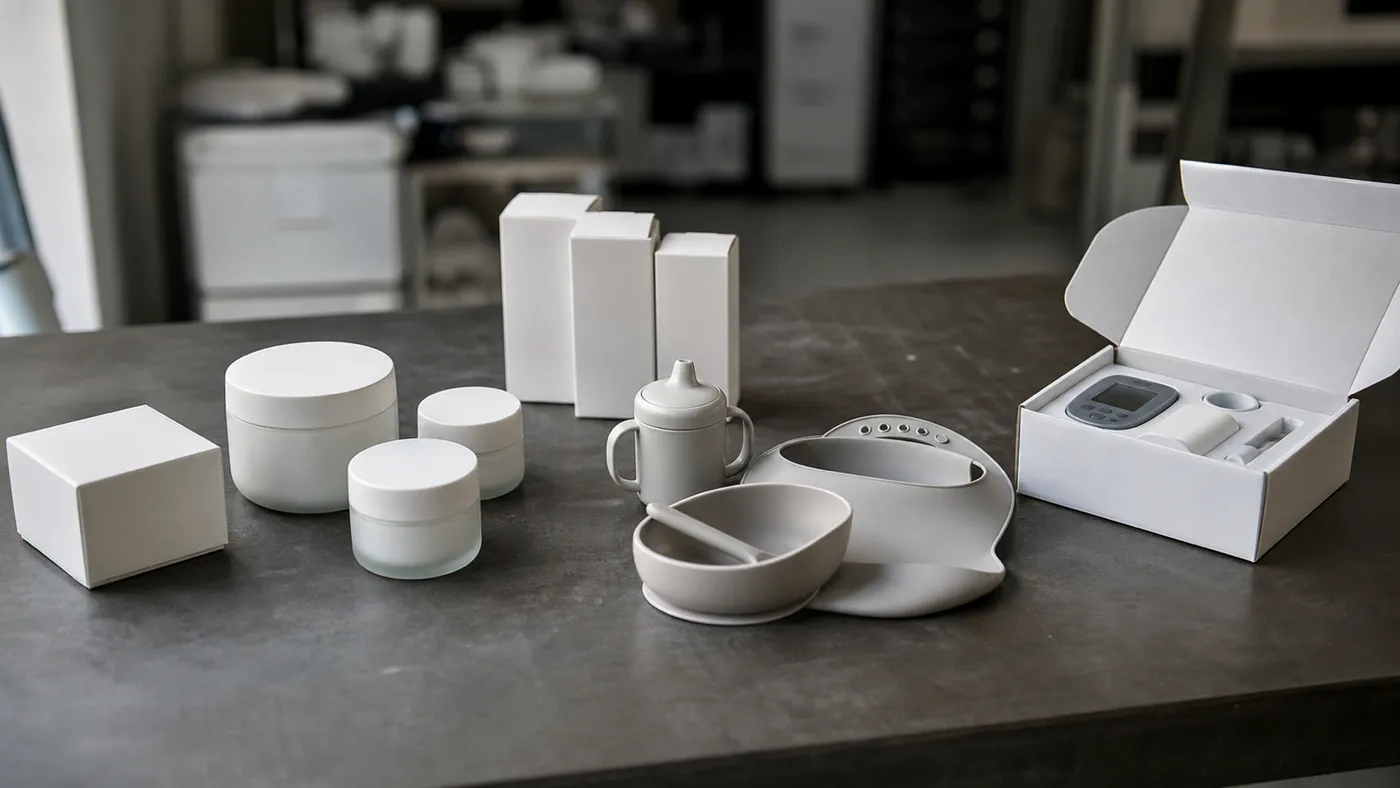
Read the full case study →A metro Sydney importer of children's mealtime goods (silicone and stainless steel) compliant with Australian mandatory safety standards. Retailers required $20M combined Public and Product Liability to list the products.
The result: $20M Public and Product Liability placed through a specialist underwriter at around $1,200 annual premium after the main market panel declined.
Read the full case study →Sector Risk Scenarios
What Claims Do Life Sciences Businesses Commonly Face?
The following scenarios are illustrative examples of the types of claims that can affect life sciences businesses. They're drawn from typical sector patterns to help you picture where cover needs to respond.
Clinical Trial Liability
Alleged Inadequate Risk Disclosure
A participant in a clinical trial experiences serious bodily harm and files a claim against the sponsor. The participant alleges the informed consent form didn't fully warn of the risks, and that the monitoring during the trial was inadequate.
How cover responds: Clinical trials liability can respond to the defence costs and research subject compensation, subject to the wording of the specific policy.
Product Recall
Contaminated Pharmaceutical Batch
A pharmaceutical business produces a batch of product intended for distribution to healthcare facilities. Routine quality checks pick up contamination, distribution is halted, and the business has to notify distributors, arrange safe return and disposal, and communicate with end users.
How cover responds: Product recall cover can respond to the notification, logistics, disposal and reputational damage costs.
Product Liability
Wearable Medical Device Malfunction
A MedTech business releases a wearable diagnostic device to the market. After widespread use, reports surface that the device has been providing inaccurate readings, leading to incorrect insulin dosing in some diabetic patients. Health complications follow, and affected patients lodge claims and lawsuits.
How cover responds: Product liability cover can respond to defence costs, settlements and court-awarded damages for bodily injury caused by a defective product.
Professional Indemnity
CRO Data Analysis Error
A contract research organisation makes an error in data collation and analysis, leading to incorrect conclusions in a clinical trial. The sponsor suffers significant financial loss because of the flawed findings and sues the CRO for professional negligence.
How cover responds: Professional indemnity can respond to the legal costs and damages awarded for professional negligence.
These scenarios are illustrative only. Whether cover responds to any specific claim depends entirely on the wording of the policy you hold and the facts of the loss.
Who We Cover
Which Life Sciences Businesses Can Get Insurance in Australia?
Life sciences is a broad umbrella. The common thread is that mainstream insurers struggle to price any of these occupations correctly. Below are the four main clusters we regularly work with. We also place adjacent niches including FemHealth, veterinary products, medical cannabis, clinical nutrition and pharmaceutical ingredient supply, subject to underwriter appetite.
Medical Device & Diagnostics
Wearables, implantables, in-vitro diagnostics (IVD), hire-and-reward medical devices, distributors and importers. Product liability is usually the critical cover alongside PL.
Consumer Chemical Products
Skincare, cosmetics, suncream, baby products, nutraceuticals, supplements and consumer chemicals introduced under AICIS registration. Product liability is almost always the dealbreaker for retailers and distribution.
Research, R&D & Consulting
Biomedical R&D consultants, scientific and data consultancies, laboratories, independent researchers and biocompatibility specialists. Professional Indemnity is the anchor cover here.
Biotech, CROs & Clinical Trials
Biotechnology businesses, contract research organisations, Phase I to Phase III clinical trial sponsors and pharmaceutical ingredient suppliers. A combined liability and clinical trials programme is typical.
Life Sciences Insurance Guides
Explore Cover by Business Activity
Detailed guides for every corner of the sector, built from Tank's placement work. Start with the activity that best describes your business, or go straight to the case studies and market intelligence.
Support
Frequently Asked Questions About Life Sciences Insurance
The usual starting point is a combination of Professional Indemnity (for advisory and research work), Public Liability (for third-party injury and property damage), and Product Liability (if a physical product is manufactured, imported, distributed or hired). Clinical trial sponsors and CROs also need Clinical Trials Liability. Biotech startups with investors typically add Management Liability and D&O cover. The right stack depends on what the business actually does. We build it around the occupation, not around a generic bundle.
There's no single answer because premium depends on turnover, the limit required, the product type, the distribution channel and the geography of sale. As a rough guide, we've recently placed $20M Public and Product Liability for a Sydney children's consumer products importer at around $1,200 annual premium, and smaller consumer chemical placements (like a baby skincare brand) at around $2,900. The biggest variable is usually whether the main panel declines and a specialist market is required. See our children's products importer case study for a real example.
Many biomedical R&D consultants carry Professional Indemnity as their core cover. If the work involves technical advice, design input, biocompatibility guidance, materials recommendations or R&D consulting to medical device developers, PI is the cover that typically responds when a client alleges that advice caused a loss. Whether it's right for a specific business is something to work through with a broker. Mainstream insurers often decline biomedical R&D on occupation alone, which is why it's one of the more difficult placements in this sector. Read how we placed combined PI and PL for a biomedical R&D consultant at around $1,900 through a specialist underwriter.
AICIS registration is a strong compliance signal, but it doesn't remove the need for Product Liability insurance. Any business selling a consumer chemical product in Australia needs Product Liability cover to respond to claims of bodily injury or property damage caused by the product. Retailers will typically ask for a certificate of currency before listing the product. For a real example, see our baby skincare product liability case study.
Three reasons, usually all at once. First, occupation codes. Terms like 'implantable device', 'biotech', 'medical device' or 'clinical trial' trigger automatic declines in most underwriter systems. Second, overseas exposure. Any link to the United States, Europe or international distribution can push the risk outside mainstream appetite - particularly the US. Third, product and downstream risk. Even a small product business can carry a long tail of claims exposure that standard business pack insurers aren't set up to price. The answer is almost never 'you're uninsurable'. It's that the submission needs to reach a specialist market.
Clinical trials liability is a specialist cover for trial sponsors, CROs and research organisations running studies on human participants. It responds to trial-related bodily injury and, where relevant, can include no-fault compensation arrangements often expected by human research ethics committees and referenced in good clinical practice frameworks. Any business sponsoring or running a Phase I, Phase II or Phase III trial typically carries this cover, often alongside legal liability on clinical trials as part of a complete trial programme.
Standard product liability responds to third-party bodily injury and property damage caused by a defective product. Product recall costs, which include notifying customers, shipping product back, disposing of affected stock and managing reputational damage, are typically handled by a separate Product Recall extension or endorsement. Specialist life sciences policies can often include this feature, subject to the underwriter and the territory. We'll tell you up front whether it's being offered on your specific placement.
Retailers and online marketplaces often require $20M combined Public and Product Liability for children's products before they'll stock or list the goods. Anything below that limit and you risk being declined by the retailer, not the insurer. We've placed $20M combined cover for a Sydney children's products importer at a commercially workable premium, so the answer exists even when the main market panel declines. See the full case study.
It can, but only if the policy is placed through a market that specifically writes biomedical and implantable device advisory work. Many standard PI policies carry exclusions or restrictions around medical device advisory work. A specialist placement can include R&D advice, biocompatibility guidance and materials recommendations, subject to clear documentation of scope. We've placed exactly this cover for a biomedical R&D consultant through a specialist underwriter, in an occupation where mainstream appetite is limited.
This is the most common pattern in Australian life sciences, and it's where mainstream markets usually fall over. The placement needs to cover Australian liability exposure plus distribution in overseas jurisdictions, which typically means a worldwide jurisdiction extension including North America where relevant. Specialist life sciences markets can offer this, subject to clear evidence of the overseas manufacturer's compliance status, the distribution channels and the territory breakdown.
Professional Indemnity is the anchor cover. Research and data consulting is pure advisory work, and the exposure is professional negligence (incorrect analysis, flawed statistical work, errors in data collation that flow through into client decisions). Where the consultant also visits client sites or handles client equipment, Public Liability is added. International clients require overseas exposure to be built into the wording. We've placed exactly this cover for a sole-trader consultancy supporting research teams across four countries at around $900 annual premium. See the case study.
Yes, subject to underwriter appetite. These are all niches that specialist life sciences markets will typically consider, though appetite shifts over time and some markets prefer specific sub-categories. Medical cannabis in particular requires a specialist market that writes the class. FemHealth and nutraceuticals (food, supplements, TGA-regulated goods) are more broadly written but still sit outside mainstream appetite. We'll go to the market that makes sense for your occupation rather than forcing it through a generic panel.
Related Cover & Reading
More Tank Insurance Resources
Useful pages if you're researching your life sciences, medical device or consumer chemical insurance placement.

Got a Life Sciences Risk That's Been Declined?
A few declines doesn't mean you're uninsurable. It usually means the submission hasn't reached the right market yet. Talk to our team about how we place life sciences, biotech, medical device and consumer chemical risks.