
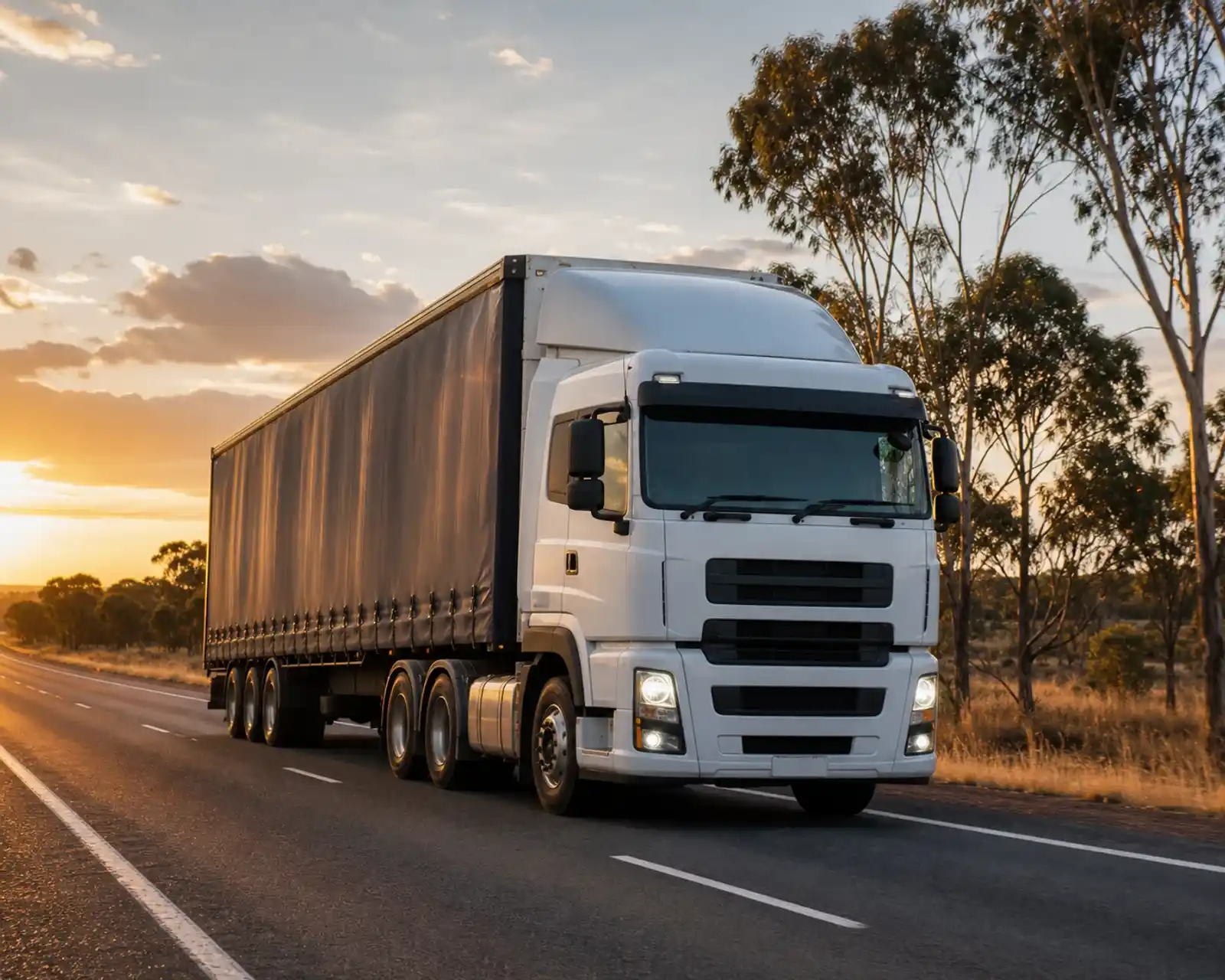
Semi Trailer Insurance
Trailers are assets that earn, depreciate and get damaged on their own schedule. They deserve better than a line item under the prime mover.
Multiple
Insurers compared
AU wide
Placement and claims support
Broker
Led cover design
Recognition

Semi trailer insurance can cover owned trailers as scheduled assets. Trailers belonging to someone else, or your trailers in another operator's hands, require specific trailer-in-control, non-owned or interchange arrangements. An unlisted trailer, understated value or undocumented interchange can create a material gap.
A curtainsider, a flat top, a skel and a refrigerated van are different assets with different values and exposures, and the schedule should say so. See prime mover insurance for the tractor unit, refrigerated truck insurance for cold-chain vans, or the truck insurance hub for the wider stack. The owner-driver prime mover case study shows trailer-in-control cover on a third-party trailer in a real placement.
The gap is usually a trailer
Trailers move between prime movers, depots and operators in a way trucks do not. That mobility is operationally brilliant and administratively dangerous: the connection between a trailer, its owner and the policy that covers it is exactly the kind of detail that drifts out of date while everyone is busy moving freight.
Three questions find most of the gaps. Is every trailer you own on the schedule at a defensible value? What happens when you are pulling a trailer you do not own, under interchange, borrowed, or a customer's? And what happens when your trailer is behind someone else's prime mover? Each has a clean insurance answer, but only if it was asked at placement.
Trailer type matters as much as ownership. Curtainsiders live with load-shift and curtain damage, flat tops with load restraint and crane loading, skels with container twist-locks, and refrigerated vans carry a fridge plant on top of everything else. The schedule that names each trailer's type and value is the foundation the whole motor program stands on.
What semi trailer insurance can cover
Owned, borrowed and lent trailers are three different questions. This is the typical split.
Usually covered
- Accident damage, fire and theft for scheduled owned trailers
- Damage while coupled to your prime movers or parked at your depot
- Non-owned trailers in your care, where trailer-in-control cover is arranged
- Recovery and salvage after an insured incident
- Fridge plant on refrigerated trailers, where itemised
Needs its own section
- Trailers missing from the schedule or listed at stale values
- Your trailers while on-hired to others, unless specifically arranged
- The freight inside, which is the goods in transit section's job
- Wear, corrosion and gradual deterioration
- Tyres alone, commonly limited unless damaged in a wider insured event
Indicative only. Trailer-in-control provisions and interchange treatment differ meaningfully between insurers, and they are the clauses that decide the awkward claims.
The program is only as good as the trailer schedule
Send us the schedule and tell us how trailers move in your operation. We will find the gaps before a claim does.
Where trailer claims get complicated
Three incidents where the ownership and schedule questions decide everything.
The borrowed trailer
Your prime mover is pulling a partner operator's curtainsider under a casual interchange arrangement when it is damaged in a rollover. Whose policy responds turns on the trailer-in-control provisions each side arranged, and on what the interchange paperwork says. Handshake interchange is where these claims go slow.
The unlisted trailer
A recently purchased flat top has not made it onto the schedule when it is damaged at a customer's yard. Whether there is any cover turns on the policy's automatic addition provisions and the timeline. A standing process for scheduling new gear beats goodwill after the event.
Depot hail event
A storm cell puts hail through every trailer parked at the depot: curtain damage, roof damage and fridge plant damage on the vans. One event, many assets, and the values on the schedule become the ceiling of the recovery, which is why stale values quietly cost real money.
What underwriters look for
Trailer risk is priced off the schedule and the arrangements around it. Expect questions on:
- The full schedule: every trailer, type, age and current value
- Interchange and borrowing: whose trailers you pull, who pulls yours, and on what terms
- Where trailers sleep: depot security for the parked fleet
- Load types and restraint by trailer type
- Fridge plant detail on refrigerated vans
- Claims history, including trailer-only incidents
A clean, current schedule with the interchange arrangements documented is the difference between a smooth claim and a slow one. We build the program from the schedule up.
How Tank places this risk
A short conversation beats a long form. We build the submission so underwriters can price the risk you actually run, not the occupation label.
Describe the operation
The trailer schedule, the interchange reality and where everything parks. Current values, not purchase-year values.
We approach the market
We arrange owned-trailer cover and trailer-in-control provisions that match how trailers actually move in your operation.
Compare and decide
You compare options knowing the borrowed-trailer and unlisted-trailer questions are already answered.
Check the rules where the work is performed
Road transport and safety duties sit outside your insurance policy. These regulator sources are the starting point.
External government sources. Tank Insurance is not responsible for their content; confirm current requirements with the relevant regulator.
More truck insurance guides
Questions about semi trailer insurance
They may be insured as standalone scheduled assets, subject to insurer appetite and terms. The arrangement should state how cover applies while the trailer is coupled, parked, on-hire or being pulled by another operator.
Only if trailer-in-control or non-owned trailer cover was arranged. A commercial motor policy generally addresses the scheduled vehicle; a borrowed or interchanged trailer is someone else's asset in your care and is a separate insuring question. If interchange is part of how you operate, it needs to be in the program deliberately, with the arrangements documented.
It depends on what was arranged on both sides: your policy's treatment of on-hired or lent trailers, the other operator's trailer-in-control cover, and any interchange agreement between you. These claims resolve quickly when the paperwork exists and slowly when it does not, so we set the answers up at placement.
Not automatically. A trailer section addresses the insured trailer as an asset; freight generally needs a separate goods in transit section with an appropriate limit. A rollover may involve both sections, each subject to its own terms, excesses and exclusions.
Premium reflects trailer types, values and age, how many units are on the schedule, interchange exposure, depot security and claims history. A refrigerated van with fridge plant prices differently from a flat top. We quote from your actual schedule rather than publishing averages.
Put your transport risk in front of the right markets
Tell us what you run, what it carries and where it travels. We will explain the available terms and exclusions before you decide.