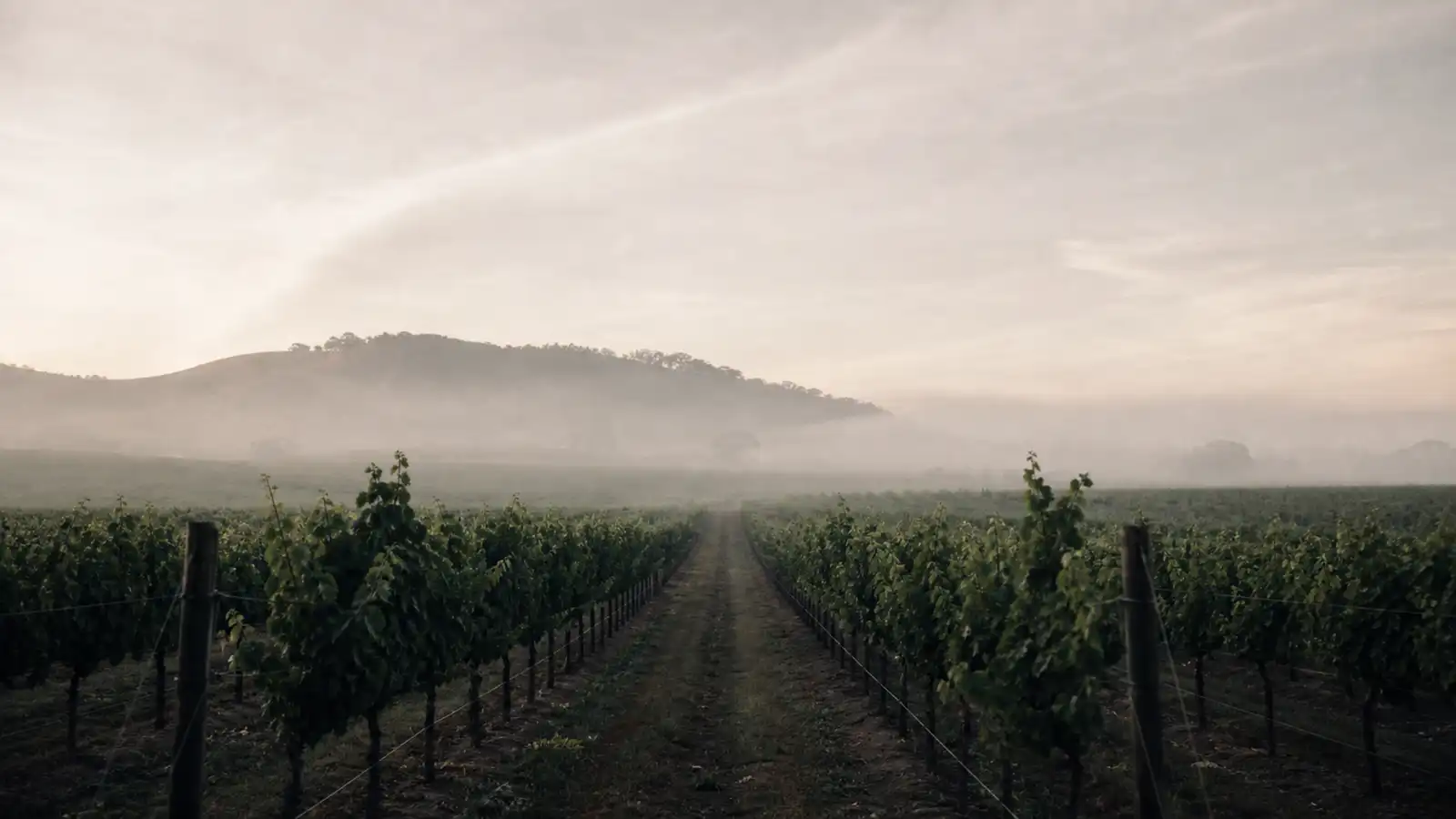
Vineyard rows at a cellar door winery, wine tour operator insurance in Australia

TOUR OPERATOR INSURANCE

Wine Tour Insurance

Guests, cellar doors, a vehicle and a day of tastings. The underwriter wants to know who pours the wine, who drives, and what happens between stops. Here is how wine tour cover fits together.

$20MPublic liability limit available
PI + PLProfessional indemnity and public liability, together or on separate policies
Who pours?A key alcohol question the underwriter asks

Premiums and outcomes described are specific to this client and indicative only. Your own terms will depend on your circumstances and the insurer.

THE SHORT ANSWER

What insurance does a wine tour business need in Australia?

A wine tour operator generally needs public liability for injury to guests and damage to other people's property, professional indemnity for errors in the itinerary or booking advice, and separate motor and passenger cover for any vehicle it owns. Wineries, national parks and booking platforms can ask to see a public liability certificate before they work with you, sometimes at $20 million. Alcohol changes the underwriting: the insurer asks whether the cellar door pours under its own licence or whether your tour supplies the wine, and how you manage guests who have had too much. At least one specialist tour operator wording we place excludes stag and hen parties, so if you take hens or bucks bookings, raise it before you bind.

Injury caused by a registered vehicle is excluded from public liability on the tour operator policies we arrange. The state compulsory third party (CTP) scheme may respond, but in Queensland, WA and SA that depends on fault, and damage to your own vehicle needs commercial motor cover. General information only. It doesn't take into account your objectives, financial situation or needs, and it isn't legal advice.

Core covers
Public liability and PI, plus motor for your own vehicles
PL limit available
Up to $20 million
Alcohol question
Who pours: the venue or your tour?
Watch for
Hens and bucks groups, e-bike and horse-drawn tours
01

A guest falls at a cellar door

Steps into a barrel room, a wet tasting-room floor or uneven gravel between the vineyard and the car park. If the claim says your guide led the group into an unsafe area or ignored a guest who was clearly unsteady, it lands on your public liability, even though the venue is someone else's.

02

A guest drinks too much

A guest who has been tasting all day is hurt climbing off the vehicle, or hurts another guest. The questions become what your guide saw, whether the tour kept serving, and what your terms say about intoxicated guests.

03

Broken stock or damaged property at a winery

A guest knocks over a display of bottles or damages a venue's furniture. Damage to someone else's property during your tour is a public liability matter, subject to the excess.

04

The itinerary goes wrong

A booked cellar door is closed, a pre-paid lunch booking was never made, or a guest's dietary needs were passed on wrongly and the group loses the day. Financial loss from an error in your professional service is a professional indemnity question, not public liability.

05

An accident on the road

Injury in a crash involving your registered minibus is excluded from public liability. The state CTP scheme may respond, but in Queensland, WA and SA that depends on fault, and the vehicle itself needs commercial motor cover. A chartered coach also sits outside public liability on the tour operator policies we arrange, so check the coach operator's insurance and accreditation.

06

A food reaction at a winery lunch

A guest has an allergic reaction to a platter. If the venue made and served the food, the claim is more likely to point at the venue. If your tour supplied the food, for example a picnic, it points at you under products liability.

SituationCover that may respondWhat to know
Guest injured at a cellar door or on a walk between stopsPublic liability can respondThe policy can respond to your legal liability, subject to the wording. Where the venue is at fault, a claim may go to the venue and its insurer instead.
Damage to a winery's property during the tourPublic liability can respondExcess applies. One wording we place sets it at $1,000.
Guest injured in a crash in your registered vehicleCTP scheme, which may respond, and commercial motorTour operator policies we arrange exclude injury caused by a registered vehicle from public liability. The state CTP scheme may respond, but in Queensland, WA and SA it depends on fault, so an injury can fall between the two.
Guest injured on a chartered coachCoach operator's coverA chartered coach sits outside public liability on the tour operator policies we arrange. Get the coach company's certificate of currency. For example, one specialist wording we place requires you to take reasonable steps so contractors hold at least $10 million liability in Australia. See vehicles and passenger liability.
Your tour supplies the wine itself: picnic bottles, or drinks on the vehicleLiquor licensing first, then confirm with the underwriterWhether you need a licence depends on the state. Queensland, WA and the ACT have narrow tour exemptions. NSW, Victoria, SA, Tasmania and the NT list none, as at October 2026. See food and alcohol on tours, and tell the underwriter before you bind.
Itinerary or booking error causes a financial lossProfessional indemnity can respondClaims made basis. Report circumstances as soon as you know about them.
Tour cancelled and guests want their money backNot insuredCancellation is excluded. Refunds are governed by your terms and the Australian Consumer Law.
General information only. Cover depends on the policy wording, the schedule and the underwriter's assessment, and wordings differ between insurers. Limits, excesses and terms on your own schedule may differ.

At least one specialist tour operator wording we place also includes property in your care, custody or control up to $250,000, which can matter if a venue lends you glassware, picnic gear or equipment for the day. If you sell through a booking platform or to a cruise line, read its insurance clause before you accept it. Our guide to booking platform and cruise line requirements sets out what the published terms ask for.

  1. Which regions and how many wineries per tour, and are any stops breweries or distilleries?
  2. Does the cellar door pour under its own licence, or does your tour supply alcohol (for example wine with a picnic lunch)? If you supply it, which liquor licence or state exemption do you rely on, and who holds responsible service of alcohol (RSA) training?
  3. How your guides handle guests who are intoxicated, and whether your terms let you refuse service or remove a guest
  4. Who drives: your own vehicle and driver, or a chartered coach company? Vehicle types and seat numbers
  5. Maximum group size and the guide-to-guest ratio
  6. Whether you take hens, bucks or other party bookings
  7. Any activities beyond tasting: cycling between cellar doors, horse-drawn carriages, vineyard walks
  8. Annual revenue, years operating and any claims or incidents

Hens and bucks parties

At least one specialist tour operator wording we place excludes stag and hen parties. If they are part of your bookings, raise it at quote stage rather than finding out after a claim.

E-bike and horse-drawn wine tours

At least one specialist tour operator wording we place excludes e-bikes, Segways and scooters, and horse riding and other equine tours. A carriage or e-bike wine trail needs a different market.

Your own vehicle

Injury from a registered vehicle, including a hired vehicle or chartered coach, is excluded from public liability on the tour operator policies we arrange. The state CTP scheme may respond, but in Queensland, WA and SA that depends on fault, and vehicle damage needs commercial motor cover.

Cancelled tours and refunds

Cancellation of a tour or activity is excluded, so refunds come from your terms and your cash flow, not the policy.

Fines for a liquor or safety breach

Tour operator policies we arrange generally exclude fines and penalties from public liability. On at least one wording we place, the PI section has a sub-limited statutory liability extension for some penalties that are insurable at law, and some WHS penalties cannot lawfully be insured. That matters for a penalty for supplying liquor without the right licence, or a work health and safety fine after an incident.

At least one specialist tour operator wording we place excludes injury from a list of adventure activities, including horse riding, e-bikes and Segways, surfing and scuba diving, and white water rafting. See the adventure activities excluded on one wording we place, grouped, and check the endorsement on your own schedule.

The venue pours. Where the cellar door serves the tastings under its own liquor licence, with its own staff, the licence and the responsible service of alcohol obligations sit with the venue. Your duty is still to run a safe tour: noticing a guest who is unsteady, not steering the group to more tastings when someone has clearly had enough, and getting everyone on and off the vehicle safely.

Your tour supplies the wine. If the ticket price includes wine you serve yourself, such as bottles with a picnic lunch or drinks on the vehicle, you are the supplier. Calling the wine complimentary doesn't change that where guests have paid for the tour. Liquor & Gaming NSW says a licence is required if free drinks are offered as part of a package, and Liquor Control Victoria says a licence is needed where alcohol is included in the ticket price. Tell the underwriter too, because it changes how they look at the risk.

The rules, state by state (as at October 2026). Queensland exempts a sale by a tour operator to an adult on a tour booked with that operator, up to 2 standard drinks per person per day, outside restricted areas and restricted hours (Liquor Act 1992 s 14B(1)(k)). Western Australia exempts complimentary supply only, by a tourism business that the regulator says must be certified under the Australian Tourism Accreditation Program, where the person serving has approved RSA training, it is not supplied or consumed on licensed premises, a road or a restricted area, and the occupier consents (Liquor Control Regulations 1989 reg 8CA). A separate WA rule lets adult passengers drink, but not buy, in an on-demand charter vehicle for no more than 14 adult passengers, hired for at least an hour and booked before the journey (reg 8F). The ACT exempts a limousine or tour business serving no more than 12 adults, up to 2 standard drinks each, at no charge (Liquor Act 2010 s 8A(3)(e)). NSW has no tour exemption: the route there is a tour authorisation attached to an on-premises licence, with food available whenever liquor is served (Liquor Regulation 2018 cl 46). Victoria, South Australia, Tasmania and the Northern Territory list no tour exemption, so a licence or permit is needed. Our guide to food and alcohol on tours has the detail for each state.

Intoxication and claims. The High Court has held that a club with a liquor licence owed no duty to protect an adult patron from the consequences of her own drinking (Cole v South Tweed Heads Rugby League Football Club Ltd [2004] HCA 29), and later said that only an exceptional case would be different (C.A.L. No 14 Pty Ltd v Motor Accidents Insurance Board [2009] HCA 47). State law adds its own rules. In Queensland, a person is not owed a duty of care merely because they are intoxicated, but that protection is switched off for conduct on premises with a liquor licence, and contributory negligence is presumed with a reduction of at least 25% unless rebutted (Civil Liability Act 2003 ss 46 and 47). Tasmania also presumes contributory negligence where the injured person was intoxicated (Civil Liability Act 2002 s 5).

Where insurance still comes in. None of that stops a guest making a claim, and it does not answer a claim by someone the drinker injures, or a guest hurt by your own negligence. Defending a claim costs money. Defence costs for a covered claim, on top of the limit, up to the costs cap, are part of what public liability pays for. The tour operator claims and court cases guide walks through the decisions.

Who asksWhat they ask forWhat to know
ViatorValid public liability insurance. From its August 2026 Supplier Agreement, Viator describes it as a mandatory global baseline and sets required minimums by activity risk and destination.If your documents expire or fall short, the account is frozen from taking new sales until updated documents are approved. Existing bookings must still be honoured.
Royal Caribbean Group (wine tours sold as shore excursions)General liability of at least US$2,000,000 per incident for land tours, plus liquor liability of at least US$2,000,000 per incident where alcohol is served. The cruise line is to be named as an additional insured.The agreement also says the policy must not exclude infectious or communicable disease. At least one specialist tour operator wording we place has that exclusion, so raise the agreement with the underwriter before you sign it.
Parks Victoria (if a stop or picnic is in a park it manages)$20 million public liability for any one claim under its Tour Operator Licence, with a seven-party interested party text shown in full on the certificate.A certificate under $20 million will not be accepted. $20 million public liability is available, and that limit meets this public liability minimum. Parks Victoria also asks for an APRA-authorised insurer and the interested party text in full, so confirm with us how the certificate will satisfy each before you apply.
NSW National Parks and Wildlife Service (Parks Eco Pass)$10 million public liability, with the Minister's interest noted in the exact words the handbook sets out.Relevant only if your route enters a NSW national park. The interested party text has to appear word for word.
Quality Tourism AccreditationCurrent public liability of at least $10 million, shown on a certificate of currency.The standards also ask for a risk management statement, documented emergency procedures, an incident report form and at least one staff member trained in first aid.
Published requirements as at October 2026. Confirm the current figure with the authority or platform before you rely on it. Some authorities also require an APRA-authorised insurer or exact certificate wording, so confirm with us how the certificate will satisfy each.

Coach crash after a winery wedding, Hunter Valley (NSW courts, 2024 and 2026)

On 11 June 2023 a chartered coach carrying 35 wedding guests from a Hunter Valley winery venue rolled at a roundabout at Greta. Ten people died and 25 were injured. The driver pleaded guilty and was sentenced in the Newcastle District Court in September 2024. The ABC reported that in August 2026 the coach operator was fined $650,000 and two directors $12,000 each after pleading guilty to heavy vehicle safety breaches, including employing a drug-impaired driver, and that the court heard the only reference check on the driver was by text message. This was a wedding charter transfer, not a wine tour.

The insurance lesson. A crash in a registered vehicle, including a chartered coach, sits outside public liability on the tour operator policies we arrange. The state CTP scheme may respond, but in Queensland, WA and SA that depends on fault. The control that matters for a wine tour business is who you charter: ask for the coach company's certificate of currency and accreditation, and ask how it checks its drivers.

Source: ABC News, 26 August 2026 (operator sentencing)

Patron injured after a day's drinking at a club (High Court, 2004)

A patron who had been drinking at a club for hours was hit by a car on a public road after she left. The club had offered her safe transport, which was refused. The High Court dismissed her appeal: the claim that the club owed a duty to monitor and moderate her drinking, or to see her safely home, failed. The case did not involve a tour.

The insurance lesson. The decision helps a business that serves alcohol against the drinker's own claim. It does not answer a claim by someone the drinker injures, a responsible service breach, or a guest hurt because the tour itself was run carelessly. Public liability can respond to your legal liability, subject to the wording, and pays defence costs for a covered claim, on top of the limit, up to the costs cap. Ask the underwriter how the policy treats alcohol your tour supplies.

Source: Cole v South Tweed Heads Rugby League Football Club Ltd [2004] HCA 29

Know who holds the licence at every stop

Confirm with each cellar door that it pours under its own liquor licence with its own staff. If your tour supplies any alcohol, write down which licence or state exemption you rely on, and its limits, before the first booking.

RSA training for anyone who pours

In NSW, responsible service of alcohol training applies to workers involved in the sale, service or supply of alcohol, including winery staff. WA's tourism exemption applies only where the person supplying has completed approved training. Keep copies of certificates.

A written plan for intoxicated guests

Set out when a guide stops tastings for a guest, offers water and food, and arranges a safe way home. Put the guide's right to refuse service or end a guest's tour in your booking terms, and brief it at the start of the day.

Check the coach company, not just the price

Collect the charter operator's certificate of currency at the start and each year, and ask about its accreditation and how it checks drivers. At least one specialist tour operator wording we place expects reasonable steps so contractors hold at least $10 million liability in Australia.

First aid on every tour

Quality Tourism Accreditation asks for at least one staff member trained in first aid and available during operations. The first aid code of practice says CPR should be refreshed every year and first aid qualifications renewed every three years.

Record and report incidents

Keep an incident register that includes near misses. Under the model work health and safety laws, a death or a serious injury or illness arising from your business must be notified to the regulator straight away, and that includes guests. Tell us early too, and don't admit fault.

We've found tour operator public liability hard to place on its own in the past, and PI and public liability often had to be split across insurers. We approach several specialist insurers and underwriting agencies. Some write PI and public liability together, others write one or the other, and we put the cover together to suit the tours you run, for tour operators and for travel agents that run their own tours, subject to each insurer's assessment.

We don't publish a separate price for wine tours. As a general guide, across the tour types the markets we approach are set up to quote, subject to each insurer's assessment, combined PI and public liability for a small tour operator costs approximately $1,200 to $1,800 a year including fees. As at October 2026. Your price depends on the activities, destinations, revenue, limits and claims history, and it can fall outside that range. It is not a quote. See what drives the premium.

A placement from September 2026. A new NSW-based cultural tour operator designs immersive programs for groups visiting Australia and for Australian groups visiting Asia, with local tour companies running the coaches and accommodation. It needed a certificate of currency urgently. Result: $20 million public liability and $1 million professional indemnity on one combined policy, worldwide territory excluding US jurisdiction, placed the same week on that occasion at approximately $1,850 including fees. This is one past placement, not a quote. Your price and terms depend on your risk. Read the case study.

Sources referred to on this page

FREQUENTLY ASKED QUESTIONS

Wine Tour Insurance FAQs

Wineries, councils, national parks and booking platforms can ask for a certificate of currency before they will work with you, and some ask for $20 million. It also pays defence costs for a covered claim, on top of the limit, up to the costs cap, even if the claim fails.
Public liability can respond to your legal liability for injury to others, subject to the wording. At least one specialist tour operator wording we place has no liquor exclusion in its base wording. Insurers treat alcohol differently, so confirm with us that no endorsement on your schedule adds one. Whether you are liable depends on what happened and what your guide did. Queensland and Tasmania, for example, presume contributory negligence where the injured person was intoxicated. Tell the underwriter how you manage intoxicated guests, because they will ask.
Not if you stay inside the tour operator exemption in section 14B(1)(k) of the Liquor Act 1992. It covers a sale to an adult on a tour booked with you, up to 2 standard drinks per person per day, outside restricted areas, and not on Christmas Day, Good Friday, before 1pm on Anzac Day or between 2am and 10am on other days. Beyond those limits you need a licence, so check with the Queensland liquor regulator.
Yes, if your tour supplies the wine. Neither state has a tour operator exemption, as at October 2026. Liquor & Gaming NSW says a licence is required where free drinks are part of a package, and Liquor Control Victoria says the same where alcohol is included in the ticket price. Where each cellar door pours under its own licence, the licence obligations sit with the cellar door.
No. Injury caused by a registered vehicle is excluded from public liability on the tour operator policies we arrange. The state CTP scheme may respond, but in Queensland, WA and SA that depends on fault, so an injury can fall between the two. Damage to the vehicle needs commercial motor cover. Public liability can respond to your legal liability for tour activities off the road, such as walking guests through a cellar door. If you charter a coach, ask for its certificate of currency.
Check before you do. At least one specialist tour operator wording we place excludes stag and hen parties. If they are part of your business, tell us before you bind so we can look at the options rather than leaving a gap. Describe your tours accurately online too, because the underwriter may review your website.
A waiver and clear booking terms help, but they have limits under the Australian Consumer Law and do not replace insurance or good risk controls. Underwriters look at your briefing, your group sizes and how you deal with intoxicated guests as much as the waiver itself.
We don't publish a separate price for wine tour insurance. As a general guide, combined professional indemnity and public liability for a small tour operator costs approximately $1,200 to $1,800 a year including fees, as at October 2026, and it can fall outside that range. For a wine tour, alcohol, group sizes, party bookings and revenue all move the price, and cover for your own vehicle is priced separately. It is not a quote.

QUOTE REQUEST

Get a Wine Tour Insurance Quote

Tell us the tours you run, where they go, group sizes, who supplies transport and venues, your annual revenue, and the limit you need on your certificate.

Specialist broker review Australian business insurance
Tour itinerary and client planning notes on a desk, tour operator insurance arranged with Tank

PI and Public Liability for Your Tours

Send us your tour descriptions and itinerary, and we will take them to the specialist markets that write tour operators and come back to you with the options available.

Last updated: 01/10/2026

Call Us Now +61 2 9000 1155