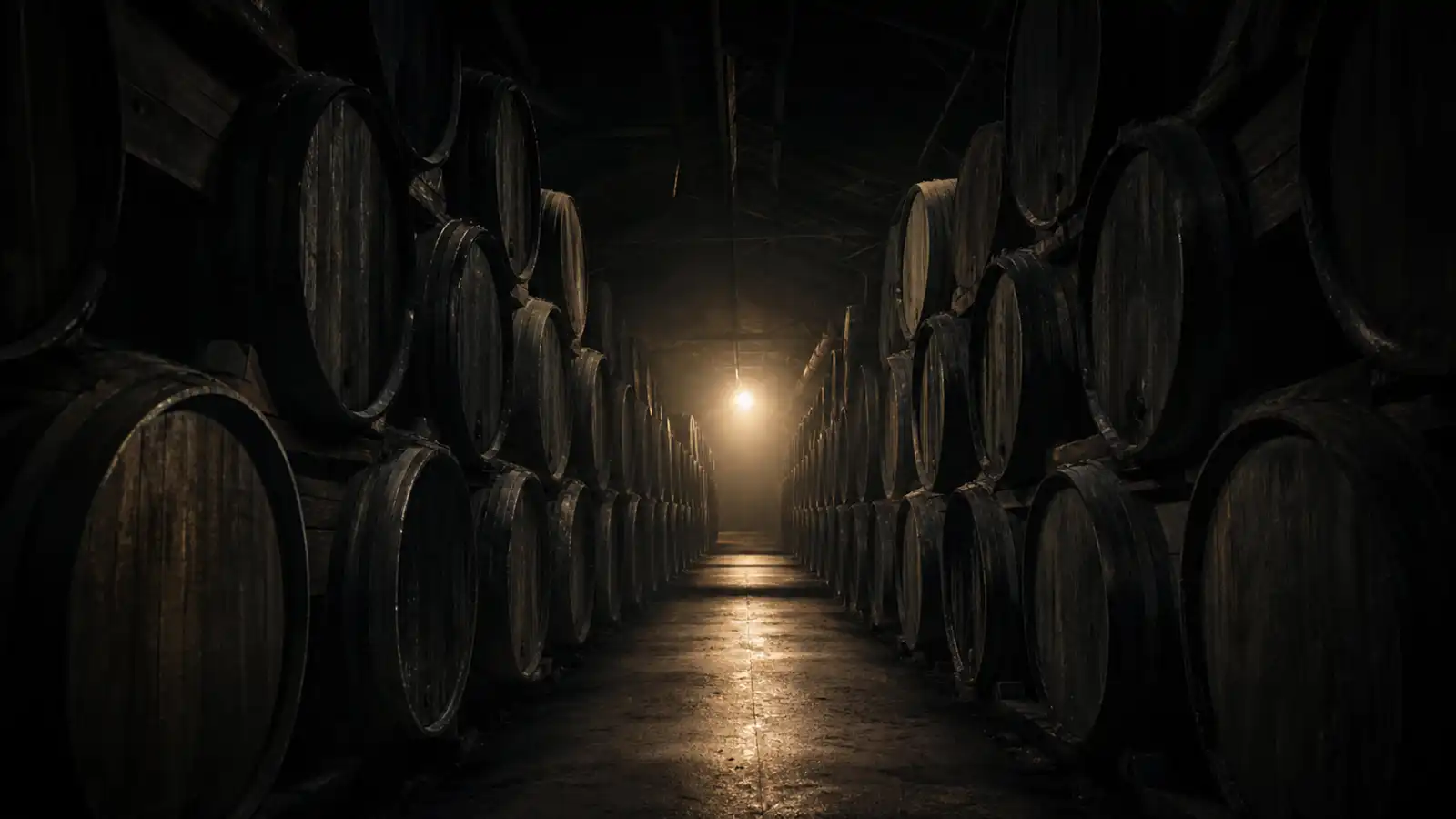
Oak barrels stacked in a distillery barrel store at dusk, distillery tour insurance in Australia

TOUR OPERATOR INSURANCE

Distillery Tour Insurance

Copper stills, barrel stores full of flammable spirit and tastings measured in millilitres. The underwriter wants to know how close your guests get, how much they drink and how they get home.

$20MPublic liability limit available
PI + PLProfessional indemnity and public liability, together or on separate policies
High proofSpirit tastings change the alcohol questions

Premiums and outcomes described are specific to this client and indicative only. Your own terms will depend on your circumstances and the insurer.

THE SHORT ANSWER

What insurance does a distillery tour business need in Australia?

A distillery tour operator generally needs public liability for guests hurt on the tour and damage to a distillery's property, professional indemnity for booking and itinerary errors, and separate motor cover for any vehicle it owns. Distilleries, councils and booking platforms can ask for a certificate of currency before they host your groups. Two things set this tour apart. Spirits are high proof, so a few tastings go further than a wine flight. And still houses and barrel stores hold flammable spirit, where a lighter or a careless guest can do real damage. The underwriter will ask about pour sizes, who pours, still house access and whether guests drive themselves between stops.

At least one specialist tour operator wording we place excludes stag and hen parties, so gin and whisky tours sold to party groups need raising before you bind. General information only. It doesn't take into account your objectives, financial situation or needs, and it isn't legal advice.

Core covers
Public liability and PI, plus motor for your own vehicles
PL limit available
Up to $20 million
Alcohol question
Pour sizes, proof and who pours
Watch for
Self-drive trails, hens groups and flames near spirit
01

A spark in the barrel store

Stored spirit gives off flammable vapour. If a guest lights a cigarette or flicks a lighter near the barrels or the still, and a fire damages the distillery, a claim against your tour will turn on what your guide briefed and allowed.

02

Hot stills and steam lines

Stills and their heating lines run hot during a distillation run. A guest who leans on a still or grabs a pipe has a burn, and the question is who let the group that close while it was running.

03

Cask-strength samples

A sample drawn straight from the barrel can be well above bottling strength. A guest who tries several gets drunk faster than the tasting menu suggests, then falls on the barrel store steps or getting back on the bus.

04

Guests driving themselves

On a self-guided spirit trail, guests follow your map and drive their own cars between tastings. If one crashes, the state CTP scheme may respond, which in Queensland, WA and SA depends on fault, and how public liability treats it depends on the wording. A claim can still ask what your itinerary encouraged.

05

A cream or nut liqueur reaction

Liqueurs can contain dairy, nuts or other allergens. If the distillery pours, a claim is likely to point at its products liability. If your tour supplies the bottle, for example at a picnic stop, the product is yours.

SituationCover that may respondWhat to know
Guest burned on a still or hurt in the barrel storePublic liability can respond (yours and the distillery's)Your policy can respond to your legal liability, subject to the wording, for example where your guide took the group into a live production area. The distillery's own insurance is for its premises.
Fire or damage at the distillery linked to your guestPublic liability can respondDamage to someone else's property can be covered where you are legally liable, subject to the wording and the excess. Your written safety briefing will matter.
Guest intoxicated after spirit tastings and injuredPublic liability can respond, subject to the wordingAt least one specialist tour operator wording we place has no liquor exclusion in its base wording. Insurers treat alcohol differently, so confirm with us that no endorsement on your schedule adds one. Expect questions on pour sizes and how your guides end the tasting.
Guest hurt in a hands-on gin-making or blending sessionCheck with the underwriterGuests operating or standing beside production equipment is a different risk from a tasting, and the underwriter has to agree to it. Tell them who runs the session and hold the venue's certificate. A real example is in the incidents section below.
Your tour pours the spirits itselfLiquor licensing first, then confirm with the underwriterTasmania, Victoria, SA, the NT and NSW list no tour exemption from licensing, as at October 2026. Queensland, WA and the ACT have narrow ones. See food and alcohol on tours.
Guest reacts to a liqueur your tour suppliedProducts liability can respondDrinks you supply are treated as products. Where the distillery pours, a claim is likely to point at its products liability.
Crash on a self-drive trail or in your own vehicleCTP scheme, which may respond, and commercial motorTour operator policies we arrange generally exclude injury caused by a registered vehicle used by you or on your behalf from public liability. How a claim about guests driving their own cars is treated depends on the wording, so raise it with the underwriter before you bind. The state CTP scheme may respond, but in Queensland, WA and SA it depends on fault.
Overseas distillery tour disrupted and guests want refundsNot insuredCancellation is excluded. For tours outside Australia, at least one specialist tour operator wording we place expects you to take reasonable steps so every guest holds comprehensive travel insurance. See insurance for overseas tours.
General information only. Cover depends on the policy wording, the schedule and the underwriter's assessment, and wordings differ between insurers. Limits, excesses and terms on your own schedule may differ.

Self-drive trails and your own vehicles sit outside public liability. Our guide to vehicles and passenger liability explains how CTP and commercial motor fit alongside it.

  1. Which distilleries and regions, and do you run tours overseas, for example to Scotland, Ireland or Japan?
  2. Do guests enter the still house or barrel stores during production, and what does your safety briefing cover (flames, closed shoes, no-go areas)?
  3. Number of tastings per stop, pour sizes, and whether barrel or cask-strength samples are offered
  4. Who pours: the distillery under its own licence, or your tour? If it's your tour, which licence, permit or state exemption you rely on, and who holds RSA training
  5. How guests travel between stops: your vehicle, a charter, or self-drive on your itinerary
  6. Whether you take hens, bucks or other party bookings
  7. Any add-ons such as gin making, gin blending or bottle-your-own sessions: who runs them, whether guests operate any equipment, and what written procedure the distillery follows
  8. Group sizes, annual revenue, years operating and any claims or incidents

Self-drive spirit trails

Tour operator policies we arrange generally exclude injury from registered vehicles used by you or on your behalf. How a claim about guests driving their own cars is treated depends on the wording, so raise a self-drive trail with the underwriter before you bind. Their state CTP scheme and motor insurance may respond, depending on the state and on fault. If your product is a self-drive trail, say so on the proposal and build responsible drinking and driving into your terms.

Hens and bucks gin tours

Stag and hen parties are excluded on at least one specialist tour operator wording we place. Raise party bookings at quote stage rather than after a claim.

Helicopter and scenic flight transfers

Aircraft of any kind, including drones, are excluded on at least one specialist tour operator wording we place. A helicopter transfer to a remote distillery relies on the aircraft operator's cover and may need a different market for your part.

Fines after a safety or liquor breach

Tour operator policies we arrange generally exclude fines and penalties from public liability. On at least one wording we place, the PI section has a sub-limited statutory liability extension for some penalties that are insurable at law, and some WHS penalties cannot lawfully be insured.

At least one specialist tour operator wording we place excludes injury from a list of adventure activities, including horse riding, e-bikes and Segways, surfing and scuba diving, and white water rafting. See the adventure activities excluded on one wording we place, grouped, and check the endorsement on your own schedule.

Proof and pour size. A spirit tasting is stronger than a wine or beer tasting, so the numbers matter: how many tastings, how big, and at what strength. Keep the tasting menu fixed and written down, tell guests what to expect, and have the guide stop a guest who has had enough. Where the exemptions for tours exist, they count standard drinks: Queensland's is capped at 2 standard drinks per person per day and the ACT's at 2 standard drinks per person. In NSW, responsible service of alcohol (RSA) training applies to workers involved in the sale, service or supply of alcohol.

If your tour pours (as at October 2026). Where the distillery pours under its own licence, the licence obligations sit with the distillery. If your tour supplies the spirits, for example a bottle opened at a picnic stop, the state decides. Tasmania has no general liquor exemption for tours or vehicles, and its Act treats a means of transport as premises, so the route is a special permit or a special licence under the Liquor Licensing Act 1990. Victoria, South Australia and the Northern Territory list no tour exemption. NSW has none either, only a tour authorisation on an on-premises licence (Liquor Regulation 2018 cl 46). Queensland (Liquor Act 1992 s 14B(1)(k)), Western Australia (Liquor Control Regulations 1989 regs 8CA and 8F) and the ACT (Liquor Act 2010 s 8A(3)(e)) have narrow exemptions with conditions. Drinks bundled into a ticket price count as a sale. The detail is in food and alcohol on tours.

Flammable stores. Barrel stores and still houses hold spirit that gives off flammable vapour. The distillery sets the rules, and your job is to brief and enforce them: no smoking, no lighters or open flames, and staying behind barriers during a live run. Damage your guest causes to the distillery can be a property damage claim under your public liability where you are legally liable, subject to the wording and the excess, and your briefing records are part of the defence.

Intoxication and the law. The High Court has twice declined to hold a venue responsible for an adult's own drinking: in Cole v South Tweed Heads Rugby League Football Club Ltd [2004] HCA 29, and in C.A.L. No 14 Pty Ltd v Motor Accidents Insurance Board [2009] HCA 47, where it said only an exceptional case would be different. That doesn't stop a guest making a claim, it doesn't answer a claim by someone the drinker injures, and defending a claim costs money. Defence costs for a covered claim, on top of the limit, up to the costs cap, are part of what public liability pays for. See tour operator claims and court cases.

Who asksWhat they ask forWhat to know
ViatorValid public liability insurance. Its August 2026 Supplier Agreement calls it a mandatory global baseline, and Viator sets the minimum by activity risk and destination.Describe the tour accurately on the listing, including any hands-on session. Expired or insufficient documents freeze new sales.
Royal Caribbean Group (distillery visits sold as shore excursions)General liability of at least US$2,000,000 per incident for land tours, and liquor liability of at least US$2,000,000 per incident where alcohol is served.The agreement also asks for additional insured status, a waiver of subrogation and primary and non-contributory wording. Those need the underwriter's agreement before you sign, because waiving recovery rights without consent can remove cover on the tour operator policies we arrange.
Quality Tourism AccreditationCurrent public liability of at least $10 million, with a certificate of currency confirming the policy is active.It also asks for documented emergency and evacuation procedures, which is where your still house briefing belongs.
Published requirements as at October 2026. Confirm the current figure with the authority or platform before you rely on it. Some authorities also require an APRA-authorised insurer or exact certificate wording, so confirm with us how the certificate will satisfy each.

Still explosion during a hands-on gin-making experience, Rutherglen (Wodonga Magistrates' Court, 2024)

On 9 April 2022, during a booked gin-making experience run by a winery at its own distillery, with no tour seller involved, a 330-litre still exploded. Its heating elements had been switched on without being fully covered by liquid, and ethanol vapour ignited. Nine people were hurt, two staff and seven guests, with burns and other injuries. A stand-in operator had only one of the two instruction documents. The company pleaded guilty to WorkSafe Victoria charges, was fined $50,000 without conviction plus $4,015 in costs, and ended the experience.

The insurance lesson. Once guests take part in production, the venue's public liability and the tour business's public liability can both be in play, and the injured staff are a workers compensation matter. If you send guests to a hands-on session, hold the venue's certificate of currency and ask what written operating procedure exists and who is trained to run it.

Source: The Border Mail, report of the sentencing (October 2024)

Patron who took back his keys after drinking: C.A.L. No 14 Pty Ltd v Motor Accidents Insurance Board [2009] HCA 47

A Tasmanian hotel licensee had agreed to hold a patron's motorcycle keys and ring his wife. The patron later refused the call, demanded the keys, rode off intoxicated and died. The High Court allowed the hotel's appeals. It held that no relevant duty of care was owed, that the proposed duty conflicted with the patron's autonomy, and that this was not an exceptional case. The case did not involve a tour.

The insurance lesson. The decision supports the principle that an adult who chooses to drink and then drive or ride carries responsibility for that choice. It doesn't remove the risk of a claim against a tour business that built the trail, and one judge noted that future cases will turn on liquor licensing laws and the civil liability statutes. Public liability pays defence costs for a covered claim, on top of the limit, up to the costs cap. Build drinking and driving rules into your terms and your itinerary.

Source: High Court of Australia: [2009] HCA 47

A flame and ignition briefing, every time

Before guests enter a still house or barrel store, brief no smoking, no lighters, no vapes and no open flames, and stay behind barriers during a live run. Record that the briefing was given.

Ask for the written procedure for hands-on sessions

If guests make or blend gin, ask the distillery what written operating procedure covers the equipment and who is trained to run it. In the Rutherglen case, a stand-in operator had only one of two instruction documents.

A fixed tasting menu

Set the number, size and strength of tastings per stop and write it down. Offer water and food. Give guides authority to stop a guest's tastings, and brief that authority at the start.

A plan for getting home

For self-drive trails, put a designated driver rule and spittoons in the itinerary and booking terms. For guided tours, plan how a guest who can't continue gets home safely.

Certificates from every venue and driver

Collect certificates of currency from each distillery and any charter or transfer company at the start and each year. At least one specialist tour operator wording we place expects reasonable steps so contractors hold at least $10 million liability in Australia.

First aid and incident reporting

Have a first aid trained guide and a kit that covers burns. An explosion, fire or serious burn arising from a business is notifiable to the work health and safety regulator immediately under the model laws. Tell us early and don't admit fault.

We've found tour operator public liability hard to place on its own in the past, and PI and public liability often had to be split across insurers. We approach several specialist insurers and underwriting agencies. Some write PI and public liability together, others write one or the other, and we put the cover together to suit the tours you run, for tour operators and for travel agents that run their own tours, subject to each insurer's assessment.

We don't publish a separate price for distillery tours. As a general guide, across the tour types the markets we approach are set up to quote, subject to each insurer's assessment, combined PI and public liability for a small tour operator costs approximately $1,200 to $1,800 a year including fees. As at October 2026. Your price depends on the activities, destinations, revenue, limits and claims history, and it can fall outside that range. It is not a quote. See what drives the premium.

A placement from September 2026. A new NSW-based cultural tour operator designs immersive programs for groups visiting Australia and for Australian groups visiting Asia, with local tour companies running the coaches and accommodation. It needed a certificate of currency urgently. Result: $20 million public liability and $1 million professional indemnity on one combined policy, worldwide territory excluding US jurisdiction, placed the same week on that occasion at approximately $1,850 including fees. This is one past placement, not a quote. Your price and terms depend on your risk. Read the case study.

FREQUENTLY ASKED QUESTIONS

Distillery Tour Insurance FAQs

Distilleries, councils and booking platforms can ask for a certificate of currency before they host your groups, and some ask for $20 million. Public liability also pays defence costs for a covered claim, on top of the limit, up to the costs cap, even if the claim fails. It sits alongside the distillery's own cover, not in place of it.
Damage to a distillery's property caused during your tour is a public liability matter if you're legally liable, subject to the excess. Whether you're liable depends on what your guide briefed and allowed, so keep a written safety briefing covering flames, smoking and no-go areas, and make sure every guest hears it before entering the still house.
The distillery decides what it pours under its own licence. From an insurance angle, tell the underwriter if stronger samples are part of the experience, how many tastings each guest gets, and how your guides stop the tasting when a guest has had enough. It shapes how they see the alcohol risk.
Yes, a licence or permit, as at October 2026. Tasmania's published general liquor exemptions don't include tours, buses or limousines, and the Liquor Licensing Act 1990 treats a means of transport as premises. The Act provides for a special permit or a special licence. Where each distillery pours under its own licence, the obligations sit with the distillery. Check with the Commissioner for Licensing before you start.
Only if the underwriter agrees, so raise them before you offer them. A session where guests operate or stand beside a still is a different risk from a tasting, and the business description on your schedule must match what you do. Tell the underwriter who runs the session and what procedure the distillery follows. If the distillery runs it with its own staff, its own insurance is for its premises and equipment, so hold its certificate of currency.
Tour operator policies we arrange generally exclude injury caused by a registered vehicle used by you or on your behalf from public liability. How a claim about guests driving their own cars is treated depends on the wording, so raise it with the underwriter before you bind. The state CTP scheme may respond to a crash, but in Queensland, WA and SA that depends on fault. Your exposure is in how the itinerary is built, so describe the trail accurately on your proposal and build responsible drinking and driving into your booking terms.
The specialist markets we approach can quote overseas tours, subject to each insurer's assessment, and the schedule we hold is worldwide, excluding US jurisdiction. At least one wording we place requires you to take reasonable steps to make sure every guest on a tour outside Australia has comprehensive travel insurance, and local transport suppliers need their own cover. That wording also excludes tours to Do Not Travel destinations.
We don't publish a separate price for distillery tour insurance. As a general guide, combined professional indemnity and public liability for a small tour operator costs approximately $1,200 to $1,800 a year including fees, as at October 2026, and it can fall outside that range. For a distillery tour, pour sizes, still house access, transport, overseas destinations, group sizes and revenue all move the price, and any vehicle cover you need is priced separately. It is not a quote.

QUOTE REQUEST

Get a Distillery Tour Insurance Quote

Tell us the tours you run, where they go, group sizes, who supplies transport and venues, your annual revenue, and the limit you need on your certificate.

Specialist broker review Australian business insurance
Tour itinerary and client planning notes on a desk, tour operator insurance arranged with Tank

PI and Public Liability for Your Tours

Send us your tour descriptions and itinerary, and we will take them to the specialist markets that write tour operators and come back to you with the options available.

Last updated: 01/10/2026

Call Us Now +61 2 9000 1155