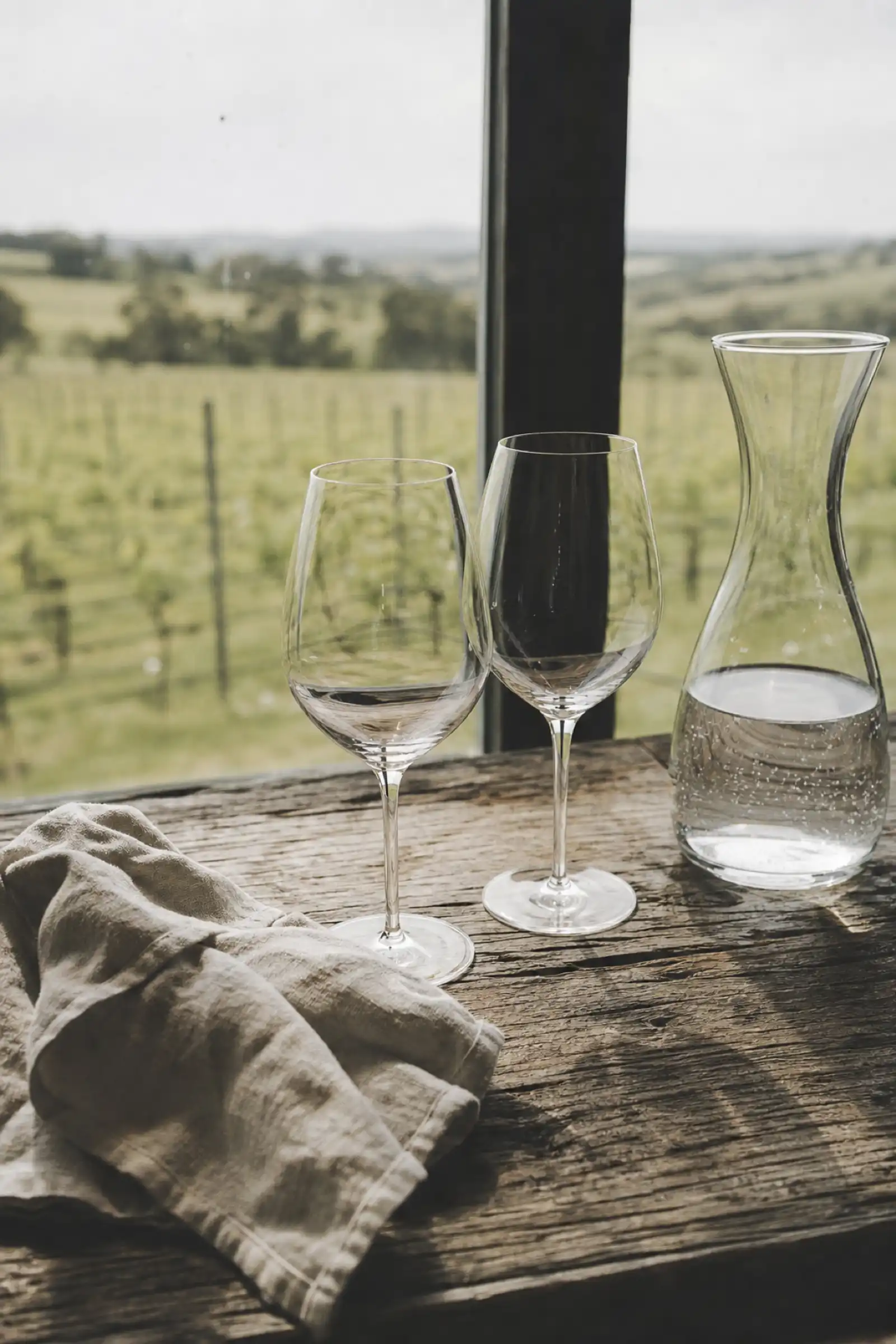
Cheese and local produce set out on a farm-gate tasting bench, cheese and produce tour insurance in Australia

TOUR OPERATOR INSURANCE

Cheese and Produce Tour Insurance

A dairy, a berry farm and an orchard stall, joined by an hour of country road. The underwriter wants to know what your guests touch, eat and pat, and who owns the farm they're standing on.

$20MPublic liability limit available
PI + PLProfessional indemnity and public liability, together or on separate policies
BiosecurityFarm rules on boots, animals and no-go areas

Premiums and outcomes described are specific to this client and indicative only. Your own terms will depend on your circumstances and the insurer.

THE SHORT ANSWER

What insurance does a cheese and produce tour business need in Australia?

A cheese and produce tour operator generally needs public liability for guests hurt on farms and damage to a producer's property, professional indemnity for booking errors, and separate motor cover for any vehicle it owns. Farms, dairies and booking platforms can ask for a certificate of currency before they host your groups. The farm setting is what sets this tour apart. Guests walk among livestock, machinery and uneven paddocks, and animal contact brings a disease risk that the notifiable and communicable disease exclusions on at least one specialist tour operator wording we place can catch. The underwriter will ask about animal contact, unpasteurised products, farm vehicles and how far you drive.

The farm's own insurance is for its property, animals and produce. Yours is for your tour, including where your guide takes guests and what you hand out yourself. General information only. It doesn't take into account your objectives, financial situation or needs, and it isn't legal advice.

Core covers
Public liability and PI, plus motor for your own vehicles
PL limit available
Up to $20 million
Farm question
Do guests touch or feed animals?
Watch for
Horse rides, quad bikes, raw milk tastings
01

Animal contact before a tasting

Guests pat calves or feed goats at a dairy, then eat cheese without washing their hands. Illness spread from animals can be the kind of disease at least one specialist tour operator wording we place excludes, so handwashing stations and a clear rule to wash before tasting are the real control.

02

A kick, a bite or a crush

A cow shifts in the milking shed, or a guest leans over a gate into a pen. Injury from the farm's animals points first at the farm, but where your guide let the group stand is yours to answer for.

03

Unpasteurised tastings

A producer offers a raw milk cheese or an unpasteurised juice. If a guest falls ill, the producer's own approvals and cover will be in question, and illness from a notifiable or communicable disease can be excluded on your policy.

04

Tractors and quad bikes

Tractors, quad bikes and trailers are part of farm life. If a guest is hurt riding on or near one, motorcycles and ATVs are on the excluded activities list of at least one wording we place, registered vehicles are outside public liability, and whether a ride on an unregistered farm vehicle is caught is a question to raise with the underwriter.

05

A gate left open

A guest leaves a gate open and the farmer's stock get out, or the group tramples a crop row. Damage to the farm's property during your tour is a public liability question, subject to the excess.

06

Long drives on country roads

An hour between farms, at dawn or dusk. Injury in a crash in your vehicle is excluded from public liability. The state CTP scheme may respond, but in Queensland, WA and SA that depends on fault, and the vehicle needs commercial motor cover. A wildlife strike is a motor question, not public liability.

SituationCover that may respondWhat to know
Guest injured by livestock during a farm visitPublic liability can respond (yours and the farm's)The farm's own insurance is for its animals and property. Yours can respond to your legal liability, subject to the wording, for example where your guide let the group into a pen.
Guests ill after animal contact or an unpasteurised tastingCheck with the underwriterNotifiable and communicable diseases are excluded under public liability and PI on at least one specialist tour operator wording we place. STEC, listeriosis, salmonellosis and campylobacteriosis are on the national notifiable list. Ask how they treat illness before you bind. See food and alcohol on tours.
Guest reacts to produce you packed into a tasting hamperProducts liability can respondFood you supply is treated as a product. An allergic reaction isn't a disease, but how a claim is treated still depends on the wording, so raise it with the underwriter.
Guest leaves a gate open or damages a cropPublic liability can respondDamage to someone else's property during your tour can be covered where you are legally liable, subject to the wording and the excess ($1,000 on one wording we place).
Guest hurt on a tractor ride or quad bikeCheck with the underwriterATVs are excluded on at least one specialist tour operator wording we place, and registered vehicles sit outside public liability. Whether a ride on an unregistered farm vehicle is caught is an open question, so raise it with the underwriter and confirm what the farm holds before a ride goes on your itinerary.
Crash on a country road between farmsCTP scheme, which may respond, and commercial motorTour operator policies we arrange exclude injury caused by a registered vehicle from public liability. The state CTP scheme may respond, but in Queensland, WA and SA it depends on fault, so an injury can fall between the two. See vehicles and passenger liability.
General information only. Cover depends on the policy wording, the schedule and the underwriter's assessment, and wordings differ between insurers. Limits, excesses and terms on your own schedule may differ.

If your route includes a stop in a national park or reserve, the park authority can set its own public liability figure and certificate wording. The published figures by state are in our guide to park and council permit insurance requirements.

  1. Which producers: dairies, cheesemakers, orchards, berry farms? How many per tour?
  2. Do guests touch, feed or walk among animals, and are handwashing facilities available at every animal stop?
  3. Are any tastings unpasteurised, and does each producer hold its own food safety approvals and public liability?
  4. Do guests ride on or near farm vehicles, tractors, trailers or quad bikes?
  5. Do you pack or sell produce yourself, such as hampers or tasting boxes?
  6. How you follow each farm's biosecurity rules, such as clean boots, footbaths and no-go areas
  7. Who drives, in what vehicle, the distances between stops, and whether tours run at dawn or dusk
  8. Group sizes, school or family bookings, annual revenue and any claims or incidents

Horse rides and quad bike loops

At least one specialist tour operator wording we place excludes horse riding and equine tours, and motorcycles and ATVs. A farm tour with a trail ride or a quad bike loop needs a different market.

Disease and biosecurity

Communicable and notifiable diseases are excluded on at least one specialist tour operator wording we place. If a farm says your group brought something onto the property, that exclusion may apply, so check with the underwriter, follow each farm's biosecurity rules and keep a record that you did.

The farm's own risks

Your policy doesn't insure the farm's animals, workers, produce or machinery. Ask for its certificate of currency, especially if guests go into sheds or paddocks.

Working farm experiences

Working holidays on ranches or lodges are on the excluded activities list of at least one wording we place. A stay where guests do farm work is closer to that than to a tasting tour, so describe it accurately and talk to us first.

At least one specialist tour operator wording we place excludes injury from a list of adventure activities, including horse riding, e-bikes and Segways, surfing and scuba diving, and white water rafting. See the adventure activities excluded on one wording we place, grouped, and check the endorsement on your own schedule.

What has happened. In August 2013, at least 12 people, mostly children, fell ill after visiting the farm-animal petting area at Brisbane's Ekka, and four tested positive for Shiga toxin-producing E. coli (STEC), according to Food Safety News. It was an outbreak among visitors to a show's animal nursery, not a tour group, but it involved the kind of animal contact a farm-gate tour can include.

Why it matters for your cover. At least one specialist tour operator wording we place excludes communicable diseases and any disease notifiable to government, under both public liability and PI. STEC is on the national notifiable disease list. So are listeriosis, salmonellosis, campylobacteriosis and cryptosporidiosis, and states keep their own lists as well. An illness outbreak after animal contact or a tasting may fall into those exclusions, which puts more weight on prevention than on the policy. Wordings differ: at least one published Australian tour operator wording has no communicable disease exclusion in its base wording, though endorsements and schedules can change any wording, while the wording we place mentioned above has one. Ask the underwriter how they would treat it, and check that each farm holds its own public liability for its animals and premises.

The controls. Handwashing with soap and running water before anyone eats, no food or drink in animal areas, close supervision of children, and each farm's biosecurity rules on clean footwear and no-go areas. Put them in your written safety procedures and your pre-tour briefing, because the underwriter can ask for both. Our risk management guide has the briefing and incident templates, and tour operator claims and court cases has more real incidents and what they show.

Produce you pack yourself. A hamper or tasting box you put together is your product. Under the plain English allergen labelling rules in force since 25 February 2024, packaged food declares allergens in bold using set names with a separate "contains" statement, and for food that doesn't need a label the declarations must be displayed with the food or provided on request. If you repack cheese, nuts or preserves, ask your council or state food authority what labelling and food business rules apply to you, and keep each producer's allergen information with the hamper list.

Who asksWhat they ask forWhat to know
Tasmania Parks and Wildlife Service (if your route enters a park or reserve)$20 million public liability for its nature based tourism business licence, with evidence before the contract issues.$20 million public liability is available, and that limit meets this public liability minimum. The licence page also asks for accreditation within 12 months, so confirm with us how the certificate will satisfy the licence conditions.
National Parks and Wildlife Service South Australia$10 million public liability for any one claim under its Commercial Tour Operator Licence, confirmed for 2026-27, with the certificate in the legal entity name.The licence terms ask for the policy to be endorsed with the Relevant Authority's and the Minister's interest. That needs to be requested, so tell us before you apply.
Quality Tourism AccreditationCurrent public liability of at least $10 million with a certificate of currency.The standards also ask for a risk management statement, an incident report form and at least one staff member trained in first aid, which suits a farm setting.
ViatorValid public liability insurance, a mandatory global baseline under its August 2026 Supplier Agreement, with minimums set by activity risk and destination.Describe animal contact and farm vehicle rides accurately on the listing and on your proposal, so the two match.
Published requirements as at October 2026. Confirm the current figure with the authority or platform before you rely on it. Some authorities also require an APRA-authorised insurer or exact certificate wording, so confirm with us how the certificate will satisfy each.

Illness among visitors to a show's animal nursery, Brisbane Ekka (health investigation, 2013)

In August 2013, at least 12 people, mostly children, fell ill after visiting the farm-animal petting area at the Ekka in Brisbane. Four tested positive for Shiga toxin-producing E. coli. A health investigation followed. No litigation was found. It was an outbreak among visitors to an agricultural show's animal nursery, not a tour group.

The insurance lesson. Animal contact illness is a claim that can be made against the venue and against a tour business that chose the stop. STEC is on the national notifiable disease list, and at least one specialist tour operator wording we place excludes diseases notifiable to government, so the exclusion is the first thing an insurer would look at. Prevention carries the weight: handwashing before food, supervision of children, and a farm that holds its own public liability.

Source: Food Safety News (August 2013)

Handwashing before any tasting

Make soap and running water a fixed step between the animals and the tasting bench, and check each farm has the facilities before you add it to the route. No food or drink in animal areas.

Follow and record each farm's biosecurity rules

Ask every producer for its rules on clean boots, footbaths and no-go areas, brief them before guests leave the vehicle, and keep a note that you did. That record matters if a farm later says a visitor brought something in.

Supervise children around animals

Agree with the farm where guests can stand, keep children within arm's reach of an adult in pens and sheds, and keep the group out of yards where stock are being moved.

Certificates from every producer

Collect each farm's certificate of currency at the start and each year, and ask whether its cover includes visitors and tastings. Raise any farm vehicle ride with the underwriter before it goes on your itinerary.

Communications and first aid on country roads

Carry a charged phone or other working communication device and a stocked first aid kit on every tour. At least one published Australian tour operator wording makes that a condition of cover. Have a first aid trained guide and know where mobile coverage drops out.

Incident register and reporting

Log every bite, kick, fall and illness report. A serious injury or illness arising from your business must be notified to the work health and safety regulator immediately, and that includes guests. Tell us early, and don't admit fault at the farm gate.

We've found tour operator public liability hard to place on its own in the past, and PI and public liability often had to be split across insurers. We approach several specialist insurers and underwriting agencies. Some write PI and public liability together, others write one or the other, and we put the cover together to suit the tours you run, for tour operators and for travel agents that run their own tours, subject to each insurer's assessment.

We don't publish a separate price for cheese and produce tours. As a general guide, across the tour types the markets we approach are set up to quote, subject to each insurer's assessment, combined PI and public liability for a small tour operator costs approximately $1,200 to $1,800 a year including fees. As at October 2026. Your price depends on the activities, destinations, revenue, limits and claims history, and it can fall outside that range. It is not a quote. See what drives the premium.

A placement from September 2026. A new NSW-based cultural tour operator designs immersive programs for groups visiting Australia and for Australian groups visiting Asia, with local tour companies running the coaches and accommodation. It needed a certificate of currency urgently. Result: $20 million public liability and $1 million professional indemnity on one combined policy, worldwide territory excluding US jurisdiction, placed the same week on that occasion at approximately $1,850 including fees. This is one past placement, not a quote. Your price and terms depend on your risk. Read the case study.

FREQUENTLY ASKED QUESTIONS

Cheese and Produce Tour Insurance FAQs

Farms, cheesemakers and booking platforms can ask for a certificate of currency before they host your groups, and some ask for $20 million. It can respond to your legal liability if a guest is hurt on your tour or you damage a producer's property, subject to the wording, and pays defence costs for a covered claim, on top of the limit, up to the costs cap.
Don't assume so. At least one specialist tour operator wording we place excludes communicable diseases and diseases notifiable to government under both public liability and PI, and illness from animal contact may fall into those. The farm's own cover is also in the picture. Prevention is the real control here: handwashing before tasting, no food in animal areas and close supervision of children.
The national notifiable disease list includes Shiga toxin-producing E. coli (STEC), cryptosporidiosis, salmonellosis, campylobacteriosis and listeriosis, among others, and states keep their own lists. It matters because at least one specialist tour operator wording we place excludes any disease notifiable to government, and separately excludes communicable diseases, under both public liability and PI. Ask the underwriter how those exclusions would apply to an illness after animal contact or a tasting.
That's first a question for the producer and your state food regulator, not your insurer. If a producer offers unpasteurised products, ask what approvals it holds and whether its public liability covers them. Tell the underwriter too. Illness from a notifiable or communicable disease can be excluded, so raise it before you bind.
Raise it with the underwriter before you include it. ATVs and quad bikes are excluded on at least one specialist tour operator wording we place, and injury caused by a registered vehicle sits outside public liability. Whether a ride on an unregistered farm vehicle is caught is an open question for the underwriter, so get their answer in writing and confirm what cover the farm holds for the ride.
Ask for its certificate of currency, its biosecurity rules, where guests can and can't go, whether animals are part of the visit, and who serves the tastings. If it asks you to sign an agreement that releases it from liability or stops you recovering from it, send it to us first so we can check how it sits with your insurance, because that can remove cover on the tour operator policies we arrange, and have your lawyer review it.
We don't publish a separate price for cheese and produce tour insurance. As a general guide, combined professional indemnity and public liability for a small tour operator costs approximately $1,200 to $1,800 a year including fees, as at October 2026, and it can fall outside that range. For a produce tour, animal contact, food you supply, children, distances driven and revenue all move the price, and your vehicle cover is priced separately. It is not a quote.

QUOTE REQUEST

Get a Cheese and Produce Tour Insurance Quote

Tell us the tours you run, where they go, group sizes, who supplies transport and venues, your annual revenue, and the limit you need on your certificate.

Specialist broker review Australian business insurance
Tour itinerary and client planning notes on a desk, tour operator insurance arranged with Tank

PI and Public Liability for Your Tours

Send us your tour descriptions and itinerary, and we will take them to the specialist markets that write tour operators and come back to you with the options available.

Last updated: 01/10/2026

Call Us Now +61 2 9000 1155