
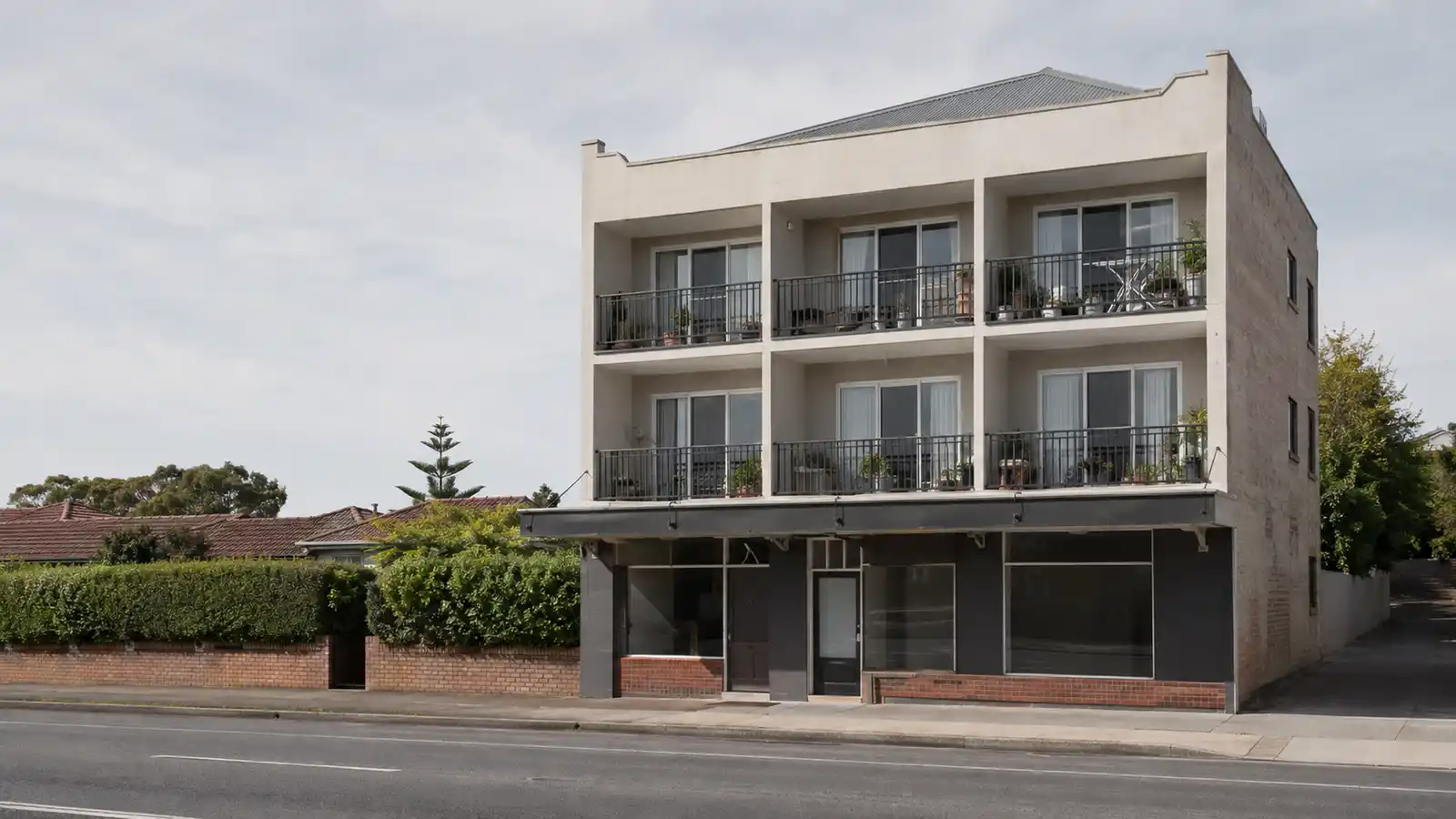
Insurance When More Than Half of Your Mixed-Use Building Is Residential
One of the most common reasons a mixed-use building is declined is arithmetic: the flats are bigger than the shop. Mainstream insurers stop at around half. We place buildings well past that line, and this page explains how the line is drawn.
Above Half
Residential
Up To ~75%
Considered
One Roof
One Policy
Recognition

THE SHORT ANSWER
When the residential part of a mixed-use building is bigger than the commercial part, most mainstream property insurers decline it, and their decline letters say so in those words. Cover is still available: we have markets that will consider buildings past half and up to around three-quarters residential by floor space, case by case, and specialist markets assess higher shares individually. The building doesn't change between insurers; the measuring stick does.
Insurers measure the residential share two different ways: floor space and tenancy count. A building with one salon and three apartments can be just over half commercial by floor space and three-quarters residential by count. We ask for both before we approach anyone, so the building goes to the market whose rule it clears.
- Mainstream cut-off
- Around half residential
- Past half
- Markets to around 75%, case by case
- Above that
- Specialist markets, still placeable
HOW IT IS MEASURED
Two ways insurers measure the residential share, and where the lines sit
There's no industry standard. Each insurer writes its own rule, applies its own measure and doesn't publish either. That's why a building can be declined by three insurers and accepted by the fourth without anything about the building changing.
01
By floor space
Square metres of residence against square metres of commercial. The most common measure, and the one most of the markets we use apply. A shop of 120 square metres under two flats totalling 160 square metres is 57 per cent residential.
02
By tenancy count
One commercial lease and three residential leases is three-quarters residential, whatever the areas. Some insurers apply this measure and decline on it even where the shop is the larger space.
03
Owner-occupied or tenanted
The share doesn't change if you live in the residence yourself, but the assessment does. An owner on site is a lower risk on vacancy, maintenance and security, and some markets weigh that.
04
Where the lines sit
Mainstream insurers tend to stop at around half. We have markets that go past that, up to around three-quarters by floor space, assessed case by case. Past that, specialist markets look at the building individually, and it is usually still placeable.
BEFORE WE QUOTE
What we need to work out which market fits
These eight answers let us calculate the residential share both ways an insurer might, and go straight to the markets whose rules the building clears.
REAL PLACEMENTS
Mostly residential buildings we've placed
Anonymised placements from our mixed-use book, with the residential split each one carried.
Premiums and outcomes described are specific to each client and indicative only. Your own terms will depend on your circumstances and the insurer.
QUESTIONS
Mostly Residential Mixed-Use - Frequently Asked Questions
RELATED COVER & GUIDES
More on mixed-use property insurance
Tell us the floor areas and the tenancy count and we can usually name the right market on the first call.
Talk to a Mixed-Use Specialist →
Told the Residential Part Is Too Big?
Send us the floor areas, the tenancy count and the decline letter. We'll calculate the share both ways an insurer might and take the building to the market whose rule it clears.