
The participant waiver
Insurers ask to see the waiver every entrant accepts. Sporting bodies usually have one in place already. If your event sits outside a sporting body, have yours drafted before you apply.
EVENT INSURANCE
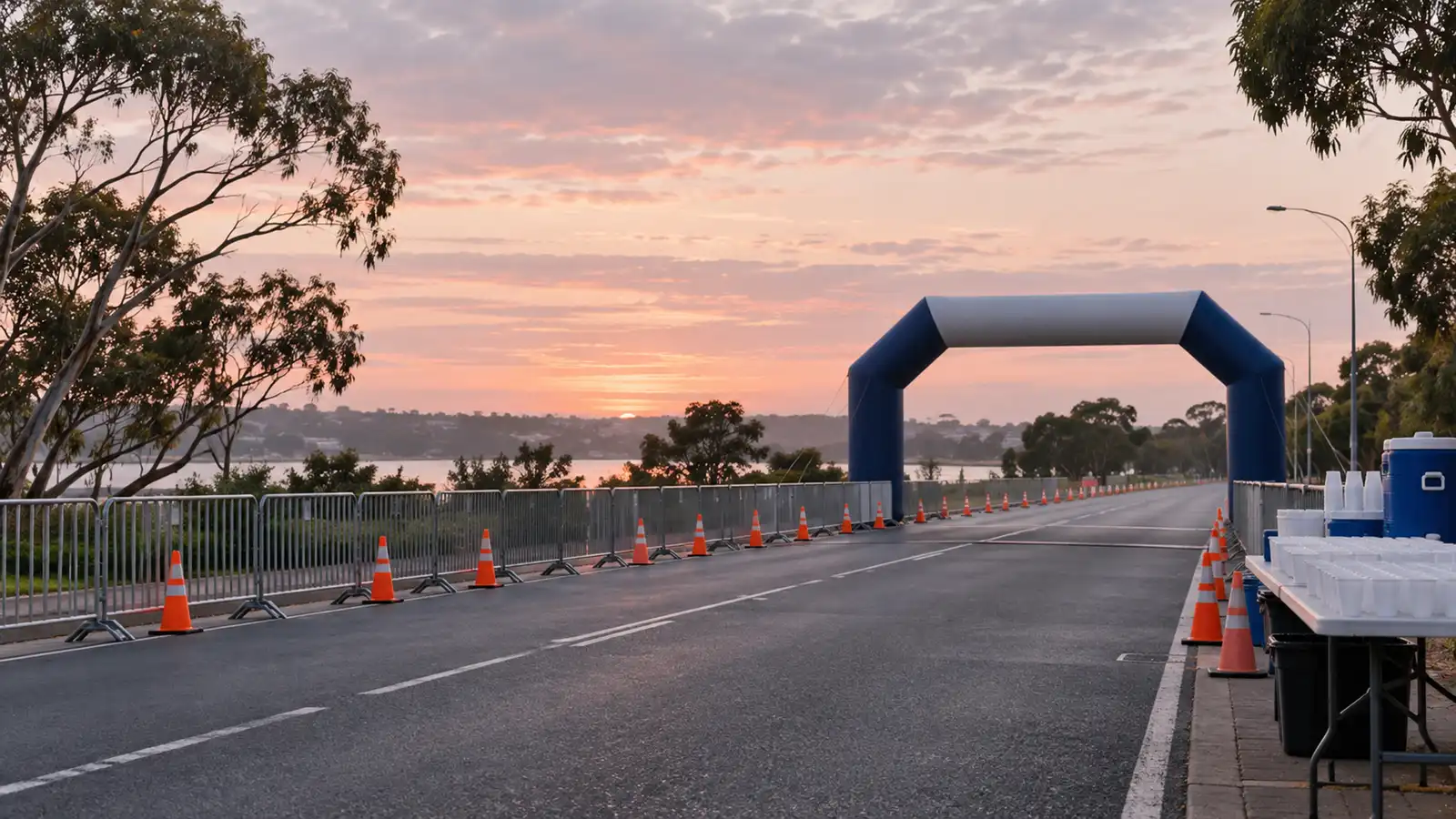
Marathons, fun runs, triathlons and cycling events put hundreds or thousands of people on a public course at once. A key insurance question is whether the policy covers the participants, or only the spectators.
Premiums and outcomes described are specific to this client and indicative only. Your own terms will depend on your circumstances and the insurer.
THE SHORT ANSWER
What insurance does a sporting event, marathon or fun run need in Australia?
Sporting events commonly need $20 million public liability, plus a clear answer on whether participants are covered, because the market splits on that point: some policies cover spectators only, some exclude races altogether, and some add participant liability by endorsement. For marathons, fun runs, triathlons and cycling events, insurers ask for the participant waiver, medical arrangements, road closures and evidence that the local authorities have been notified. Cover for participants' own injuries is possible but rare. If a sport's governing body sanctions your event, check what that sanctioning already covers before you buy separately.
Road events need traffic management approval well ahead of the day, often several months for major closures, and councils usually want a certificate of currency with the application.

Our events specialist
Shaneel Gounden
Account Executive
For marathons, fun runs and other mass-participation events, insurers ask for the participant waiver, any medical certificates, the road closures and evidence that local authorities have been notified. Cover for participants' own injuries is possible, but rare.
Previously in the Entertainment and Sports team at Marsh, placing event liability, cancellation and prize cover, then in events at Aon.
General information only. It does not take into account your objectives, financial situation or needs. Consider the relevant PDS and TMD before deciding, and cover is subject to the policy terms.
| Approach | What it means | Where you see it |
|---|---|---|
| Spectator-only cover | The public and spectators are covered. Claims involving competitors while they compete are not. | Some event liability products for sporting competitions |
| Participation excluded | Claims arising from anyone taking part in a sport, race or competition are excluded, sometimes with carve-backs for non-contact activities | Seen in some published event liability wordings |
| Participant liability by endorsement | Adds cover for a competitor's liability to other people arising from their participation | Offered by some markets, with its own exclusions |
| Small-event products with sport lists | Some cover fun runs, colour runs and marathons but exclude cycling, triathlon-style events, swimming and motorsport | Check the activity list before you rely on it |
| Participant personal accident | Pays towards a participant's own injury, whoever was at fault | Possible but rare as an organiser purchase; often comes through a sport's sanctioning cover |
A standard public liability policy bought for a business may not be written with a race in mind. Before you rely on any certificate, read the participation clause and the list of excluded activities, or send it to us and we will read it for you.
Insurers ask to see the waiver every entrant accepts. Sporting bodies usually have one in place already. If your event sits outside a sporting body, have yours drafted before you apply.
First aid or medical coverage on the course, and any medical certificates required of entrants for longer or harder formats.
Which roads close, for how long, and who controls them. A traffic management plan is expected for any event on public roads.
Evidence that police, council and the road authority have been notified or have approved the event. Underwriters ask for this on mass-participation events.
Course hazards, weather thresholds for calling the event off, heat, water stations, marshal positions and the emergency plan.
How many, what they do and whether they are covered. Public liability does not pay for a volunteer's own injury; voluntary workers personal accident does.
Road-based events sit under road authority and police processes as well as council ones. NSW guidance for special events, for example, grades them by traffic impact, and events that affect major roads need the longest lead times. Road races generally need police and road authority approval well ahead, so check current state guidance. A traffic management plan prepared by a qualified person is usually part of the application.
Councils generally want the certificate of currency to show $20 million public liability, name the council as an interested party, and cover set-up and pull-down as well as the event. Some councils ask for $10 million for events on their land but $20 million for road closures. See council venue insurance requirements for what the certificate needs to show.
Some sports run sanctioning systems that bring insurance with them. Triathlon Australia's published sanctioning policy (2021), for example, links a race permit to whole-of-sport insurance covering the organiser, participants, volunteers, coaches and officials, with the certificate of currency issued only after the application is approved and the sanctioning fee is paid. AusCycling describes its public liability as a prerequisite for sanctioned racing.
That can make separate race liability unnecessary, so check it before buying twice. Things to confirm: that the certificate meets the council's limit and interested party wording, what happens if the sanction is withdrawn, whether expos, festival villages or concerts attached to the race are included, and whether any cancellation or weather cover sits in the package. Anything the sanctioning cover leaves out, we can look to place.
A typical example: severe weather arrives days before an outdoor event, the authorities stop it on safety grounds, and a loss adjuster attends to assess the claim. Whether cover responds depends on having bought cancellation with the adverse weather extension before the forecast turned, because anything already known when cover is bound is excluded.
Clubs running a season of events can be better served by one annual program, covering public liability and event cancellation across the calendar, than by a string of single-event policies.
FREQUENTLY ASKED QUESTIONS
QUOTE REQUEST
Tell us the sport and format, expected entrants and spectators, the course and any road closures, whether the event is sanctioned, and the limit your council or venue needs.
Send us the event details and any certificate you already hold. We will tell you where participants, volunteers and cancellation sit, and what is missing, working to your council deadline.
Last updated: 01/10/2026