
Very heavy rain
At least one published wording defines very heavy rain as a downpour of more than 50 mm in an hour. Other wordings use different definitions or none.
EVENT INSURANCE
In our events specialist's experience, weather is the most common cause of event cancellation claims. Here is how adverse weather cover works, why it is not the same as rain cover, and what an insurer will want to see if the weather stops your event.
Premiums and outcomes described are specific to this client and indicative only. Your own terms will depend on your circumstances and the insurer.
THE SHORT ANSWER
How does weather insurance for events work in Australia?
Adverse weather cover can pay your net loss, subject to the wording's triggers, when severe weather makes an event unsafe or impossible to run, such as very heavy rain, gale-force wind, a severe thunderstorm or hail, flood, bushfire or a named cyclone, or when police or the council call the event off on safety grounds. It is sold as an extension to event cancellation or on its own. It is not rain cover: light rain that keeps people away is generally not a claim, and that risk needs a separate rain (pluvius) product where you choose the millimetres and the hours. Claims are generally checked against readings from the nearest official weather station.
In our events specialist's experience, weather is the most common cause of event cancellation claims. Triggers and definitions vary by wording, so the definition in your policy is what counts.

Our events specialist
Shaneel Gounden
Account Executive
In our events specialist's experience, weather is the most common cause of event cancellation claims. Adverse weather can be bought on its own or added to cancellation, and the trigger levels vary from one underwriter to the next.
Previously in the Entertainment and Sports team at Marsh, placing event liability, cancellation and prize cover, then in events at Aon.
General information only. It does not take into account your objectives, financial situation or needs. Consider the relevant PDS and TMD before deciding, and cover is subject to the policy terms.
| Adverse weather | Rain (pluvius) cover | |
|---|---|---|
| What it responds to | Severe weather that makes the event unsafe or impossible to run | A set amount of rain falling in a set time window |
| Typical trigger | Named conditions such as very heavy rain, gale-force wind, severe thunderstorm or hail, flood, bushfire or a named cyclone | The rainfall in millimetres and the hours you nominate when you buy it |
| Does light rain count? | No. Rain that only keeps people away is generally not adverse weather | Yes, if it reaches the amount you chose within the window |
| How it is sold | An extension to event cancellation, or on its own | A separate product, often with revenue history required |
| Best for | Protecting the whole budget when the event cannot safely go ahead | Events where rain reduces the gate even if the event still runs |
Some insurers state it plainly on their proposal forms: an adverse weather policy is not a pluvius policy, and light rain is not adverse weather. If your real worry is a wet day halving the walk-up crowd, the product you are after is rain cover, not a weather extension.
At least one published wording defines very heavy rain as a downpour of more than 50 mm in an hour. Other wordings use different definitions or none.
Defined by wind-speed ranges that differ between insurers, so read the definition in your wording rather than relying on a single number.
Usually defined by a combination of large hail, damaging wind gusts, tornadoes or very heavy rain likely to cause flash flooding.
Typically requires the system to be formally named, together with sustained wind at or above gale force.
Bushfire is often defined by fire danger ratings or ember attack. Some insurers only include bushfire if you ask for it.
Some wordings also respond where severe weather leads police or the local authority to deem the site unsafe, or where it cuts off access roads or causes major travel disruption.
In some wordings, the named weather must also do something to the event: cause major travel disruption, restrict access roads, lead police or the local authority to deem the site unsafe, or make it unsafe to run the event. The numeric definitions often apply only to that last test, which is why a direction from the authorities is such important evidence.
A typical example: severe weather arrives days before an outdoor event, the authorities stop it on safety grounds, and a loss adjuster attends to assess the claim.
In a claim like that, police, the council or the venue direct that the event cannot proceed safely, the organiser has that direction in writing, and the weather station readings support it. Where the organiser decides to cancel on their own judgement, the claim still has to meet the wording's definition of adverse weather, so keep the evidence that supports the decision.
Tell us, and through us the insurer, as soon as it looks like the event may be called off or cut short. Do not wait until after the date to raise it.
Keep the written direction from police, council or the venue, emails and messages, photos and video of the site, and any weather warnings issued. The claim may be tested against readings from the nearest official weather station.
The insurer will usually appoint a loss adjuster, who may attend the site. They will look at what happened, why the decision was made and what money was actually lost.
Claims are generally based on your net loss, so keep invoices, refunds issued, deposits recovered and any costs you saved by not running the event.
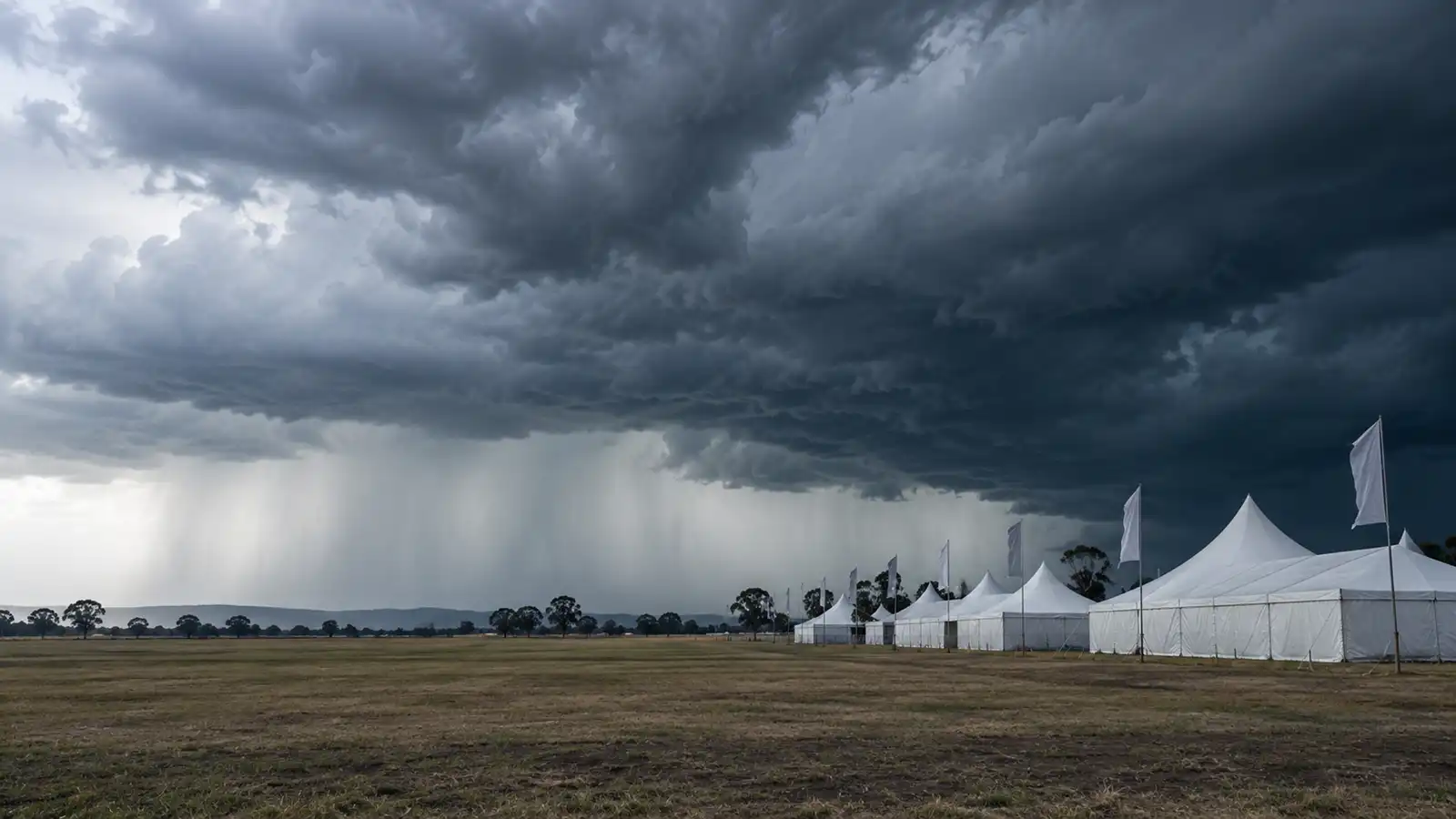
Outdoor events. Open-air sites, marquees and temporary structures carry the most weather exposure, and some adverse weather extensions only apply to them. Underwriters ask whether the event can run in continuous moderate rain and wind, how close the site is to a river or lake, whether there is hard standing, and what wind load the temporary structures are rated for.
Indoor events. Far less exposed, but not immune. Flood, cyclone or cut roads can stop an indoor conference or concert. Whether that falls under the base cancellation cover or a weather section depends on the wording.
Timing. Anything foreseeable when you buy the cover is excluded, so weather cover needs to be in place before a system appears on the forecast. Cancellation cover is usually bound and paid well before the event, often weeks ahead. See event cancellation insurance for how the base cover works.
FREQUENTLY ASKED QUESTIONS
QUOTE REQUEST
Tell us the event, the date, the site, whether it is outdoor or under cover, and the budget you want to protect. We will take it to specialist event markets and come back to you with the options available.
Weather cover has to be in place before a storm is on the radar. Talk to us early about which product fits your event and your budget.
Last updated: 01/10/2026