
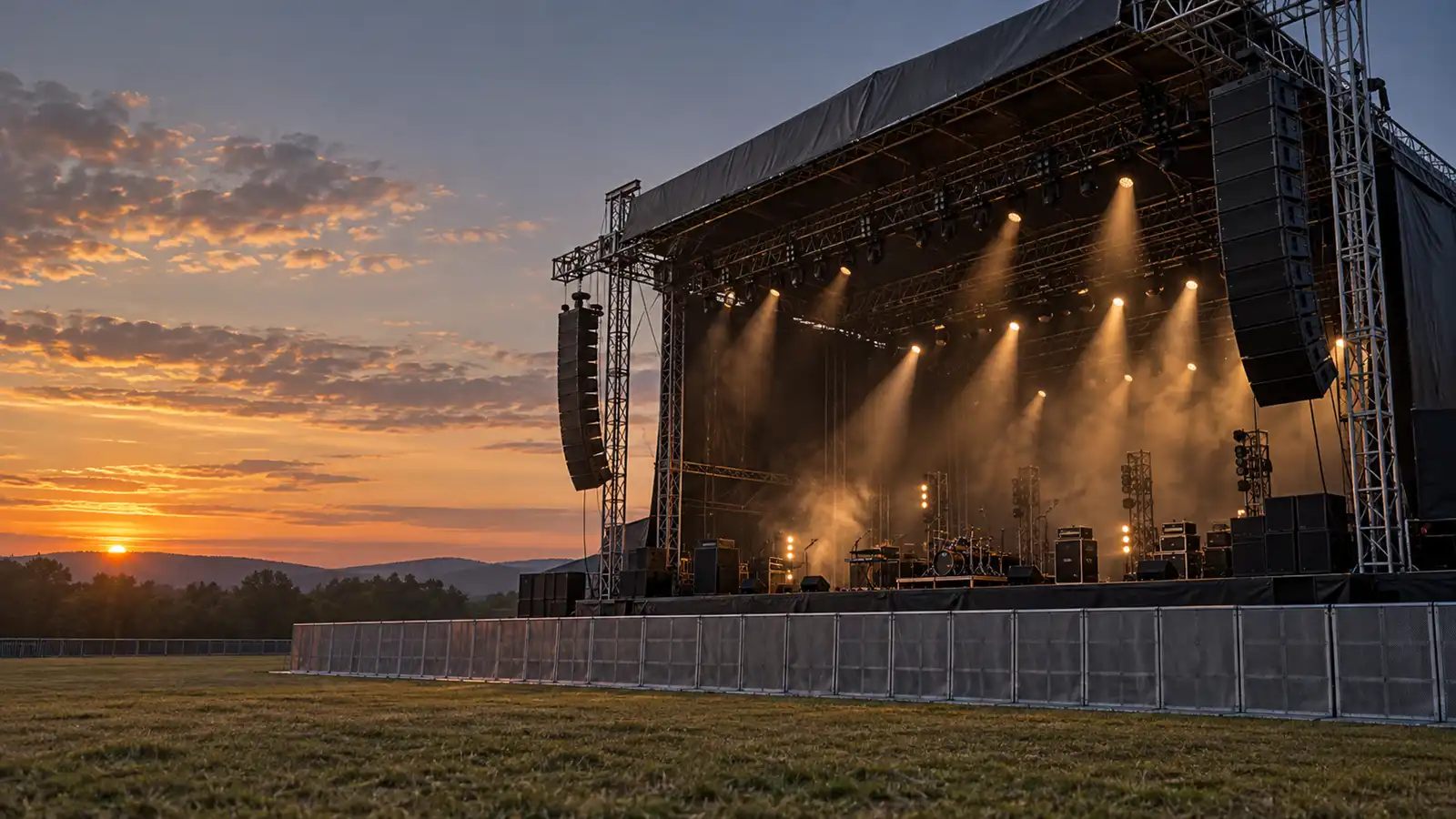

Festival stage lighting rig and speakers at dusk, music festival and concert insurance

EVENT INSURANCE

Music Festival and Concert Insurance

A festival is a crowd, a bar, a stage and a budget that only pays back if the gates open. Underwriters look at each of those separately. Here is what they ask about, what each cover does, and where festivals get stuck.

$20MPublic liability many venues and councils ask for
2,000+Attendance where at least one proposal form asks for a risk management plan
Costs or revenueThe two ways to insure the ticketed budget
6 to 12 monthsWhen to start on a large festival

Premiums and outcomes described are specific to this client and indicative only. Your own terms will depend on your circumstances and the insurer.

THE SHORT ANSWER

What insurance do I need for a music festival or concert in Australia?

Many music festivals and concerts need $20 million public liability, event cancellation for the ticketed budget, and non-appearance cover if a headline act carries the show. Underwriters price the liability on attendance, a standing crowd, alcohol, security and temporary structures, and at least one specialist underwriter's proposal form asks for a copy of the risk management plan once any one event reaches 2,000 people. Cancellation is usually insured on the costs and expenses you would lose, and priced against that sum insured. For a large festival, start six to twelve months out, because cancellation has to be bound and paid well before the gates open.

Premiums vary widely from event to event. Festival premiums are priced individually on attendance, crowd type, alcohol, security, structures and claims history, so we do not publish indicative figures. Your quote will itemise premium, fees, GST and stamp duty.

Usual liability limit
$20 million
Liability priced on
Attendance, crowd, alcohol, security
Cancellation priced on
The budget or revenue insured
When to start
Six to twelve months out
Shaneel Gounden

Our events specialist

Shaneel Gounden

Account Executive

On a festival, underwriters generally look closely at the risk management plan. They are most comfortable when security and temporary structures are handled by third-party contractors carrying their own insurance, and alcohol is rated per bar staff member on top of the base premium.

Previously in the Entertainment and Sports team at Marsh, placing event liability, cancellation and prize cover, then in events at Aon.

General information only. It does not take into account your objectives, financial situation or needs. Consider the relevant PDS and TMD before deciding, and cover is subject to the policy terms.

01

A risk management plan

Underwriters generally look closely at the risk management plan on larger or public events. At least one specialist underwriter's proposal form asks for a copy once any one event reaches 2,000 people, along with a site map for larger outdoor sites. Expect to send it with the submission.
02

Security and crowd control

Insurers prefer a licensed third-party security contractor that carries its own public liability, with crowd control, screening and bag checks assigned to them in the contract. Some wordings exclude crowd control liability unless that arrangement is in place.

03

Alcohol

Acceptable with the right liquor licence and every bar worker holding RSA. It is usually rated per bar staff member on top of the base premium, and underwriters ask who holds the licence and who runs the bars.

04

Stages and temporary structures

Fine if the venue supplies them. Otherwise underwriters prefer a third-party staging contractor with its own insurance, and may ask about riggers' tickets, inspections and whether seating is anchored.

05

Pyrotechnics and special effects

Commonly excluded unless a licensed pyrotechnician runs them and gives you proof of their own insurance. Some small-event products exclude fireworks outright, so check before you commit to the show design.

06

Moshing and crowd surfing

Treatment varies. At least one published wording excludes injuries from crowd surfing, moshing and stage diving unless signs prohibiting it are displayed near the stage and at the entrance. Other wordings treat it differently, so check yours.

CoverWhat it pays forWhat to know
Public liabilityInjury to attendees and damage to other people's property$20M is the usual requirement. Excess usually $500 to $1,000. Does not cover your own crew's or volunteers' injuries.
Event cancellationMoney lost if the event is cancelled, abandoned, postponed or cut short for reasons outside your controlPoor ticket sales are not covered. Communicable disease is generally excluded. Terrorism varies by insurer.
Adverse weatherCancellation caused by severe weather that makes the site unsafe or unreachableUsually an extension to cancellation. It is not rain cover: light rain that keeps people at home will not trigger it.
Non-appearanceLosses if a named headliner cannot perform through illness, accident or travel disruptionMany standard cancellation wordings exclude non-appearance, so it is bought as its own section, with health declarations for each named act.
Voluntary workers personal accidentInjury to your volunteersPublic liability will not respond to your own people.
Stallholders and food vendorsTheir liability to your patronsEither each vendor holds their own public liability, or they can be bundled into the organiser's policy when we place the event.
General information only. Cover depends on the policy wording, and wordings differ between insurers.

A common misunderstanding is that public liability covers the organiser's own people. It covers injury to the public and damage to other people's property. Your crew, your volunteers and your own gear sit outside it, which is where event public liability ends and personal accident and equipment cover begin.

Pricing. The premium is priced against the sum insured, then moved by the site, weather exposure, the extensions you add and the event's history. Rates vary widely between festivals, so we price each one on its details, and minimum premiums apply.

Costs or revenue. In our events specialist's experience, most organisers insure the budget, meaning the costs and expenses they cannot get back. Bigger events often insure gross revenue, which adds the profit they would have made and needs figures to support it. Insurers also ask how many tickets are pre-sold and what your refund policy says.

Sum insured. Many wordings reduce a claim if the amount insured is below the full budget, so organisers generally insure the full amount they stand to lose. At least one published wording pays on a net loss basis. Underinsuring to save premium can cost more than it saves.

What it will not pay for. A festival that is called off because tickets are not selling is a financial failure, not an insured event. Communicable disease is generally excluded since COVID, and terrorism and civil commotion cover vary by insurer. Read more on event cancellation insurance and adverse weather cover.

Before joining Tank, Shaneel Gounden worked in the Entertainment and Sports team at Marsh and then at Aon. In his career he has placed public liability and event cancellation for large music festivals. On hard risks, the approach is to identify what underwriters will question in the risk management plan and security arrangements before the submission goes to market, so the organiser can address it, rather than after the first declines come back.

At Tank, we placed an event staging and pack-up crew's renewal after nine insurers declined the occupation, at approximately $4,700.

FREQUENTLY ASKED QUESTIONS

Music Festival Insurance FAQs

Festivals generally start with public liability, usually $20 million because that is what many venues and councils ask for. Many festivals with a real budget also take event cancellation for the costs they would lose, and non-appearance if a headline act carries the ticket sales. Organisers typically add voluntary workers personal accident if volunteers are on site, because public liability will not cover their injuries.
Yes, by insuring on a gross revenue basis, which covers your costs plus the profit you would have made. In our events specialist's experience, most organisers insure costs and expenses only, because it is cheaper, and larger or established events tend to insure revenue. Insurers usually want revenue history to support it, and a shortfall from poor ticket sales is not covered either way.
If you bought the adverse weather extension, it responds when severe weather such as flooding, gale-force wind, a severe thunderstorm or very heavy rain makes the site unsafe or cuts off access, measured against official weather station data. Triggers vary by wording. Light rain that just reduces the crowd is not adverse weather; that needs separate rain cover.
Many standard cancellation wordings exclude non-appearance, so organisers typically add a non-appearance section naming the performers. A loss adjuster usually investigates a claim, and the key question is whether the show can be rescheduled. If it can, cover typically pays the costs of moving it to a new date, subject to the wording. Cover responds only to covered causes such as illness, injury or unavoidable travel disruption, not a decision not to perform.
It is harder. Some insurers decline large rave events, and others will consider them with strong risk management at higher rates. Some small-event products exclude outdoor electronic music festivals. The way to improve the chance of terms is to address what underwriters will ask about security, medical and crowd management before the submission goes out.
Start six to twelve months out for a large festival, while the budget, risk management plan and contractor insurances come together. In our events specialist's experience, many single-event liability quotes are not released more than about 90 days out, and an annual policy is another way to secure cover early. Cancellation must be bound and paid before the event, often weeks ahead.

QUOTE REQUEST

Get a music festival insurance quote

Tell us the event dates, venue, expected attendance and whether the crowd is standing, whether alcohol is served, who runs security, and the budget you want to protect.

Specialist broker review Australian business insurance
Empty event hall after pack-down with house lights low, event insurance arranged with Tank

Get the Festival Submission Right First Time

Festivals that come in late with a thin risk management plan can narrow the markets willing to quote. Send us what you have and we will tell you what underwriters will ask for before we take it to market.

Last updated: 01/10/2026

Call Us Now +61 2 9000 1155