
Brewery Insurance
Cover for the brewhouse, the beer in tank and package, the taproom pouring it, and the income that stops if production does. Built by a broker around how your brewery actually operates.
PL + Property
Core Package
Breakdown
Paired With Spoilage
Liquor
Taproom Liability
Recognition

THE SHORT ANSWER
Brewery insurance packages property cover for the brewhouse, tanks and stock with machinery breakdown and spoilage protection, public and product liability for the taproom and the beer you sell, and business interruption if production stops after insured damage.
The brewery-specific traps are stock in tank that's only protected if spoilage cover is added, refrigeration failure sitting under machinery breakdown rather than fire cover, and taproom liquor liability that has to be specifically addressed. A standard business pack won't tick those boxes by default.
Craft breweries of every size: taproom-first microbreweries, production breweries packaging for wholesale, contract brewers, and brewpubs where the venue and the brewhouse share a roof.
Whatever the setup, the same questions decide the cover: what the tanks and packaging lines cost to replace, how much beer sits in tank and package at any moment, and who's drinking in the taproom.
If the venue side is the bigger part of your business, our cellar door insurance page covers the tasting-and-events angle in depth. For the broader package around it, start with our business insurance brokers page.
CORE COVER MIX
Cover built around a working brewery
A brewery programme is assembled from the sections below, sized to your kit, your stock and your taproom. All cover is subject to policy terms, limits and exclusions.
Property
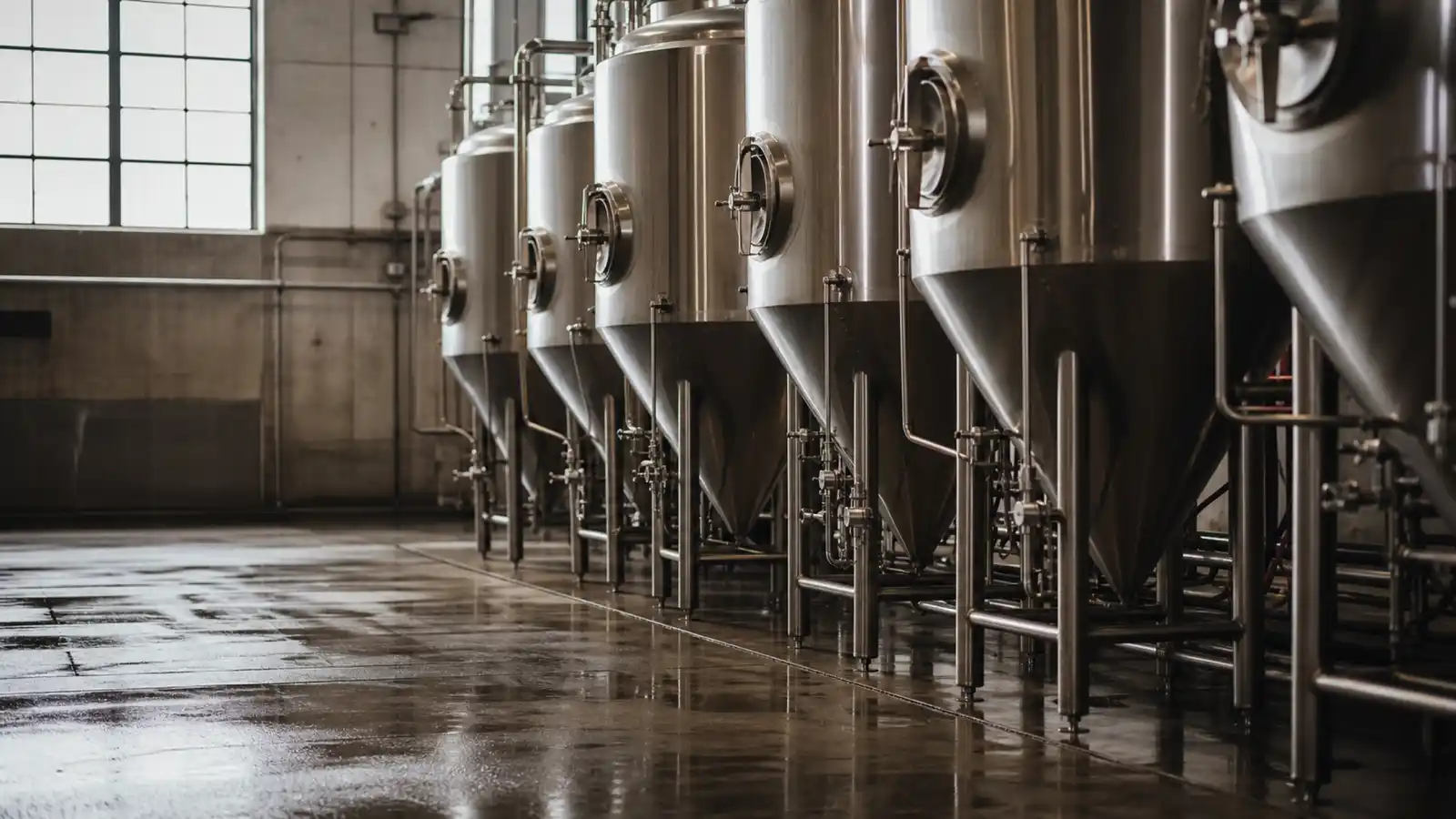
Brewhouse equipment, fermenters, brite tanks and packaging lines against fire, storm and other insured damage.
Stock
Beer in tank, keg, can and bottle, plus malt, hops and yeast on site, with spoilage cover specifically added for temperature-control failure.
Machinery Breakdown
Glycol chillers, refrigeration, boilers and pumps. Its own section, paired with spoilage so a failed chiller doesn't leave the beer uninsured.
Public & Product Liability
Taproom visitors, tours and events, plus the beer you package and sell, with liquor liability specifically addressed.
Property
Brewhouse equipment, fermenters, brite tanks and packaging lines against fire, storm and other insured damage.
Stock
Beer in tank, keg, can and bottle, plus malt, hops and yeast on site, with spoilage cover specifically added for temperature-control failure.
Machinery Breakdown
Glycol chillers, refrigeration, boilers and pumps. Its own section, paired with spoilage so a failed chiller doesn't leave the beer uninsured.
Public & Product Liability
Taproom visitors, tours and events, plus the beer you package and sell, with liquor liability specifically addressed.
POLICY SCOPE
What Brewery Insurance Covers
The sections a brewery programme is built from, and where the gaps tend to hide unless they're specifically arranged.
Usually Covered
Not Typically Covered
This is a general guide only. What is and isn't covered depends on the terms, conditions, limits and exclusions of your specific policy.
WHY BREWERIES ARE DIFFERENT
The Exposures That Set a Brewery Apart
Three things separate a brewery from a generic business package, and each one shapes how the programme is structured.
Beer that lives on refrigeration. If the glycol system or cold room fails, the stock in tank can be lost without a single flame. That's a breakdown-plus-spoilage event, and both sections have to be in place for the claim to work.
Packaged product in the market. Once beer leaves in cans and kegs, product liability carries the injury risk and recall cover carries the cost of pulling a batch back. They're separate covers doing separate jobs.
A taproom on a production site. Serving the public alongside working equipment needs public liability with liquor liability specifically addressed, matched to your licence and trading hours.
Beer that lives on refrigeration. If the glycol system or cold room fails, the stock in tank can be lost without a single flame. That's a breakdown-plus-spoilage event, and both sections have to be in place for the claim to work.
Packaged product in the market. Once beer leaves in cans and kegs, product liability carries the injury risk and recall cover carries the cost of pulling a batch back. They're separate covers doing separate jobs.
A taproom on a production site. Serving the public alongside working equipment needs public liability with liquor liability specifically addressed, matched to your licence and trading hours.
WHAT WE SEE IN PRACTICE
When production is outsourced but the exposure isn't
One recent enquiry illustrated why contract-brewed brands sit outside the standard boxes. An alcohol brand had outsourced all of its manufacturing and bottling to two Sydney contract breweries. It supplied the recipes, sold online and through wholesale, and poured 30ml tasting samples at promotional events, with no full venue service of its own.
Eight markets declined the risk, and three online portals had no occupation category that could describe the business at all. One market produced the only indicative option, at approximately $2,300 a year. The enquiry did not proceed to a Tank policy.
The lesson holds for any contract-brewed brand: outsourcing production does not remove the product liability or alcohol-service exposure that comes with your name on the can. Underwriters still need the contract-manufacturing arrangement, who owns the recipes, the sales channels and the tasting model before they'll consider terms, and that's information a broker submission can carry where an online form generally can't.
BREWERY FAQS
Common Questions About Brewery Insurance
RELATED COVER
More for Craft Beverage Producers
Tell us about your tanks, your packaging and your taproom. We'll structure cover around how the brewery actually runs.
Talk to Our Team →
Cover the Brewery End to End
Brewhouse, tanks, stock, taproom and the income behind it all. One programme, structured to close the brewery-specific gaps.