
Contents
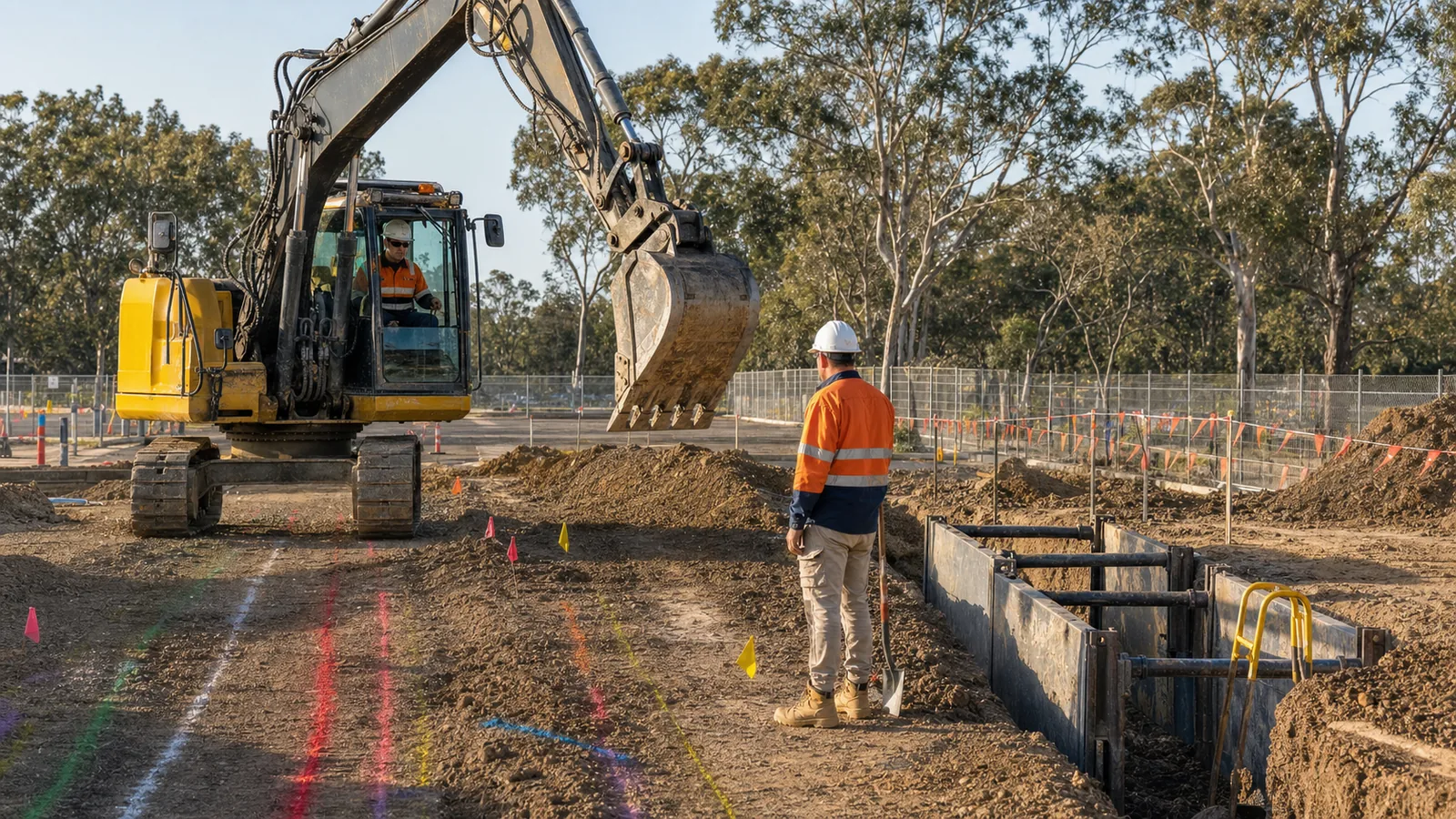
Earthmoving and excavation sound interchangeable, but they don’t tell an insurer the same thing. Earthmoving is a broad description of moving soil or material. Excavation is work that creates an open face, hole or cavity, including trenches, shafts and tunnels.
For insurance in 2026, the difference becomes practical when plant, depth, underground services and site responsibilities enter the submission.
Are earthmoving and excavation the same insurance risk?
No. The labels can overlap, but an underwriter needs the work method behind them. A business grading a site with a loader presents different facts from one excavating deep trenches near live services.
Start with Tank’s earthmoving and excavator insurance guide. Then separate the activity using this matrix.
| Question | Earthmoving example | Excavation detail to disclose |
|---|---|---|
| What is the work? | Grading, clearing or bulk movement | Trench, shaft, footing or open cut |
| What plant is used? | Loader, dozer, grader | Excavator and attachments |
| How deep does it go? | May stay near surface | Maximum and usual depth |
| What is nearby? | Structures, traffic and people | Underground and overhead services |
| Who operates the plant? | Owner or employee | Wet hire, subcontractor or principal |
This isn’t a risk ranking. It is a disclosure checklist that replaces vague labels with facts.
Why do depth and underground services matter?
Depth and services define how the excavation is planned and controlled. Safe Work Australia says excavation work includes removing soil or rock to form an open face, hole or cavity, and includes trenches, shafts and tunnels.
Its guidance also identifies duties around underground-service information and high-risk construction work. A trench more than 1.5 metres deep is one of the situations referenced in its SWMS guidance, subject to the applicable jurisdiction’s laws.
These are safety and legal mechanics, not claims statistics. For insurance, the submission can record usual and maximum depths, service-location procedures, shoring or battering methods, and who controls the site.
How should plant and hire arrangements be mapped?
Plant ownership and operator responsibility need separate answers. Owned machinery may require material-damage cover. Hired-in plant can carry contractual obligations. Dry hire transfers possession without the owner’s operator, while wet hire includes an operator or service.
Tank’s dry-hire insurance guide explains that model. If the business supplies operators, document who directs the work, who checks services and who signs off site conditions.
Plant insurance is cover for specified machinery or equipment, subject to its insured events, limits and exclusions. It doesn’t automatically include public liability insurance for third-party allegations.
What supports the comparison?
Safe Work Australia’s excavation definition provides the regulatory context. Tank’s original plant, depth and services matrix organises the practical insurance questions.
What should an earthmoving or excavation submission include?
A clear submission can cover:
- Activities split by grading, clearing, trenching, footing and civil work.
- Usual and maximum excavation depths.
- Plant schedule, values, attachments and registration status.
- Wet-hire, dry-hire and subcontracted work separated.
- Service-location, exclusion-zone and site-control procedures.
- Work near roads, buildings, rail, water or live infrastructure.
- Contracts, principal-contractor requirements and liability limits.
- Claims history and any relevant operator licences.
For project context, compare civil contract works insurance with the contractor’s own plant and liability cover. Different parties can insure different property and responsibilities.
Frequently asked questions
Are earthmoving and excavation the same for insurance?
No. Earthmoving is a broad business description, while excavation describes work that removes soil or rock to form an open face, hole or cavity.
Why does excavation depth matter to an insurer?
Depth helps describe the work method, collapse exposure, access controls and regulatory requirements, so it can affect underwriting.
Does plant insurance include public liability?
Not automatically. Plant damage and third-party liability are different cover questions and may sit in separate sections.
To discuss a submission, contact Tank Insurance on 02 9000 1155 or email [email protected].