
Contents
Concrete pumping insurance sits across a registered vehicle, specialised plant and work performed on someone else’s site. A pump truck can drive on the road, deploy a boom and operate under a wet-hire contract, but those functions don’t automatically belong to one cover section.
The practical task in 2026 is to split the operation into vehicle, plant and service exposures. Then the schedule and wording can be tested against each stage.
What insurance can a concrete pumping business consider?
A concrete pumping business can consider commercial motor, plant or machinery damage, public liability, property and business interruption. Contract works cover may be relevant to a project, but it isn’t a substitute for insuring the pump or the operator’s liability.
Tank’s concrete pumping insurance page gives the industry overview. This cover map shows why the equipment and work need separate questions.
| Part of the operation | Main question | Cover to discuss |
|---|---|---|
| Registered truck | What happens on the road? | Commercial motor |
| Mounted pump and boom | Is machinery damage insured? | Plant or machinery damage |
| Concrete hose and accessories | Are detachable items scheduled? | Plant, tools or equipment |
| Pumping service on site | Could work cause third-party loss? | Public liability |
| Project materials and works | Who is responsible under the contract? | Contract works |
The answer depends on policy definitions. A truck-mounted unit may need co-ordinated cover so the vehicle and pumping apparatus don’t fall into an unintended gap.
Is a pump truck a vehicle, plant or both?
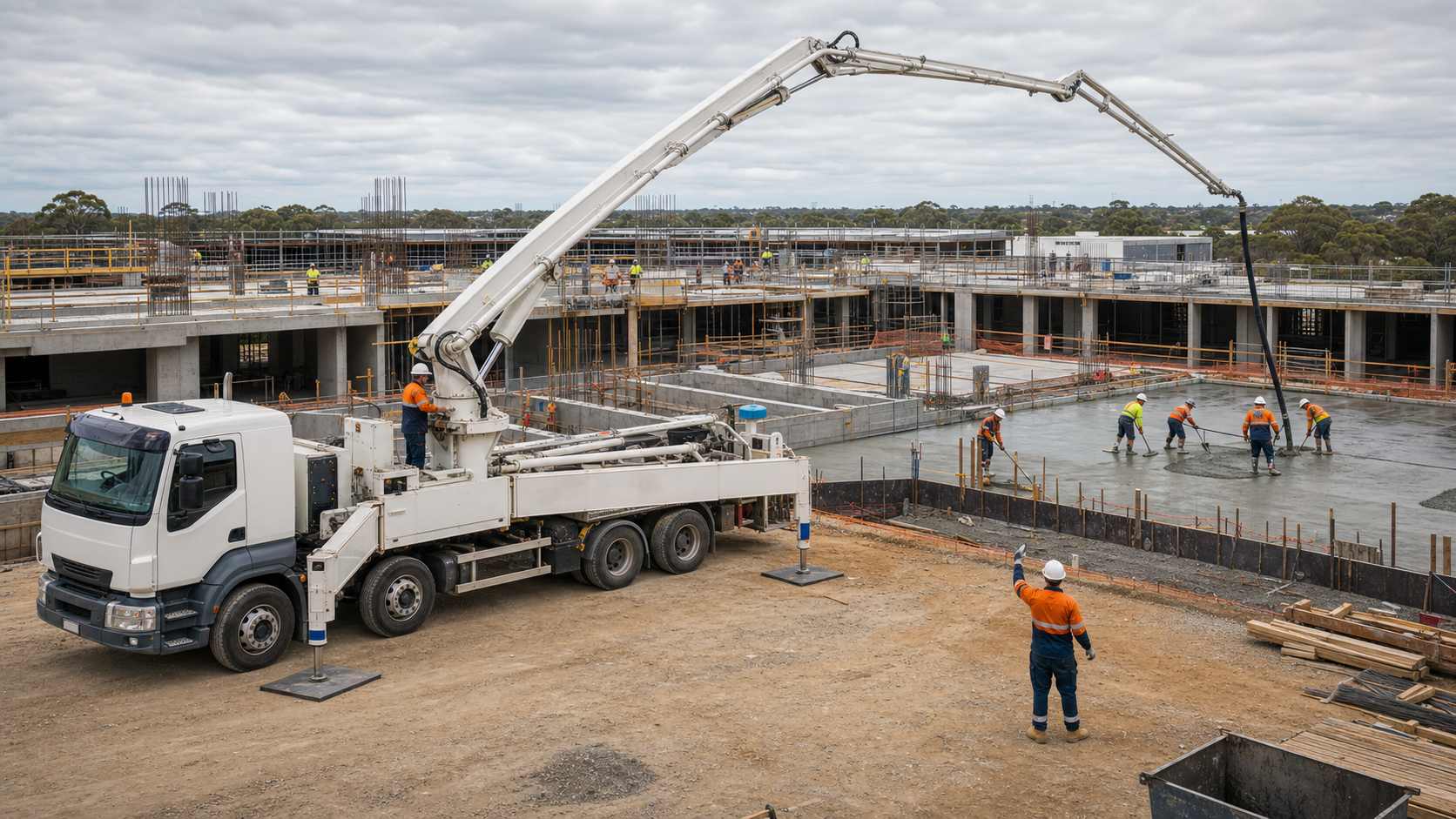
For insurance mapping, it can be both. The chassis and road use point towards commercial motor insurance, while the boom, pump and hydraulic components create plant and machinery questions.
Ask how the policy treats damage while the unit is travelling, being set up and actively pumping. Also check recovery costs, accessories, hired-in equipment and whether the insured value reflects the complete configured unit rather than the base truck alone.
Plant insurance is cover designed for specified machinery or equipment, subject to the insured events and exclusions in the wording. It doesn’t remove the need to disclose road registration or operational use.
How does wet hire change the exposure?
Wet hire combines equipment with an operator or service. That can add responsibility for positioning, setup, boom movement, pumping and site communication beyond the physical asset itself.
Contracts can allocate responsibilities between the pumping business, builder and concrete supplier. Insurance needs to be checked against those obligations, but a contract can’t expand the insurer’s promise beyond the policy wording.
Safe Work Australia’s concrete pumping risk guide discusses plant, outriggers, exclusion zones, delivery trucks and operating conditions. Those controls concern safe work. They can also help an underwriter understand how the operation is managed.
What belongs in a concrete pumping submission?
A useful submission gives the underwriter enough detail to identify the equipment and the service. Consider including:
- Registration, make, model, year and full configured value of each truck.
- Pump type, boom length, output and detachable accessories.
- Owned, leased and hired-in plant separated clearly.
- Wet-hire and dry-hire activities, if both occur.
- Work environments, including civil, commercial or residential sites.
- Operator qualifications, maintenance and inspection records.
- Outrigger, exclusion-zone and overhead-service controls.
- Claims history, contracts and required liability limits.
Discuss the liability component through public liability insurance. For project property, understand where the builder’s contract works insurance begins and ends.
Frequently asked questions
Is a concrete pump truck insured as a truck or plant?
It can involve both vehicle and plant exposures. The programme needs to identify the registered vehicle, mounted pumping equipment and how each section responds.
Does public liability cover damage to the pump itself?
Generally no. Public liability addresses covered third-party allegations, while damage to owned plant normally requires a property or machinery section.
Does wet hire change concrete pumping insurance?
It can. Wet hire adds an operator and service responsibility, so the activity, contract and allocation of risk need to be disclosed.
For help preparing the cover map, contact Tank Insurance on 02 9000 1155 or [email protected].