
MIXED-USE PROPERTY INSURANCE

How Much Does Mixed-Use Property Insurance Cost?

Mixed-use property premiums typically range from around $3,000 to $15,000+ a year, depending on configuration, construction, location, sum insured and the commercial tenant's activity. Our portfolio average sits around $7,200 annually. Here's what actually drives the price, with real premium examples from our mixed-use placements.

$3K From (regional, simple)
$15K+ Complex heritage/hospitality
5 States placed
11 Max declines rescued
01

OVERVIEW

Mixed-use property insurance isn't priced on a simple rate card. Premium depends on configuration (retail+residential, office+residence, hospitality+residential, medical+residential), construction type and age, location, sum insured, claims history, and the specific risk profile of each tenant's activity.

The ranges on this page come from Tank's actual mixed-use placements across NSW, VIC, QLD, SA and WA. Every figure is drawn from real policies bound for real property owners - not insurer brochures or industry averages. Our portfolio average sits around $7,200 annually, with most placements landing between $3,000 and $9,000.

These figures are directional - drawn from Tank's mixed-use placements plus broker market experience, not strict per-deal statistics. Individual placements will sit above or below these ranges depending on the property's specific risk profile.

What you'll typically pay:

  • Simple regional mixed-use (office or low-risk retail + residence): roughly $3,000 to $4,500 a year
  • Retail and residential (modern build, metro): roughly $3,500 to $6,500 a year
  • Medical or allied health tenancy with residential: roughly $4,000 to $9,000 a year
  • Wellness / beauty / professional services with residential: roughly $4,500 to $8,500 a year
  • Hospitality (cafe, food retail) with residential: roughly $6,000 to $16,000+ a year
  • Heritage-listed mixed-use: adds a 20-40% loading on top of the equivalent modern-build range
  • Boarding house or complex multi-tenancy: roughly $7,000 to $15,000+ a year
  • High sum insured ($20M+) or ISR territory: typically priced as Industrial Special Risks rather than standard mixed-use

These are annual premium ranges - before GST and brokerage - for standard mixed-use cover including building, public liability and loss of rent across both the commercial and residential portions. See ISR mixed-use for higher-value placements.
02

PREMIUM BY CONFIGURATION

The commercial tenant's activity is the single biggest premium driver for mixed-use property insurance. The table below shows typical annual premium ranges we've placed across seven mixed-use configuration types - with the median column showing where most placements cluster for that configuration.

ConfigurationLowMedianHigh
Indicative ranges from Tank's mixed-use portfolio. Not a quote - individual placements vary by construction, location, sum insured and claims history.
Owner-occupied office + residence (simple, regional)$3,000$3,500$4,500
Retail shop + residential (modern build, metro)$3,500$4,800$6,500
Medical / allied health + residential$4,000$6,500$12,800
Wellness / beauty + residential (metro)$4,500$5,900$8,500
Creative studio / light commercial + residential$4,500$6,400$9,000
Hospitality / cafe + residential$6,000$10,000$15,400+
Complex multi-tenancy (3+ tenancies, incl. boarding house)$7,000$9,500$15,000+

Two things to note: heritage construction adds a material loading on top of whatever the base configuration would cost (typically 20-40%), and a prior claim on the commercial portion almost always prices worse than a prior claim on the residential side. Boarding house components are a near-blanket exclusion for mainstream insurers - expect to go to specialist markets and pay accordingly.

03

WHAT DRIVES YOUR PREMIUM

Six factors move mixed-use premiums most. Every insurer weighs them differently based on appetite, so the mix matters.

01

Commercial tenant's activity

Low-risk tenants (professional offices, allied health, low-stock retail) attract the lowest loadings. Higher-risk tenants (cafes, restaurants, hospitality, fitness, wellness after the 2026 NSW arson concerns) attract significant loadings or outright declines. A small commercial kitchen below three apartments can push pricing harder than a large office tenancy in the same building.

02

Construction type and age

Brick and tile from 1980-2010 is the sweet spot. Timber and weatherboard is harder, particularly in Queensland. Heritage buildings (pre-1950) attract automatic loadings from many insurers regardless of condition. We've placed 1880s double-brick at ~$3,000 and 1920s Queensland timber at ~$6,400.

03

Location and natural hazard

Bushfire zones, cyclone ratings, flood overlays and coastal proximity feed directly into pricing. Metro Sydney and Melbourne are well-serviced; regional VIC and SA more competitive on simpler risks; Queensland timber is a known hard market. Premium differentials between states on the same configuration can be 30-60%.

04

Sum insured (replacement cost)

Not market value - it's the cost to rebuild from scratch including demolition and council approvals. Heritage rebuild costs often sit 30-50% above standard construction. Under-insurance reduces partial claim payouts proportionally. Professional valuations every 2-3 years keep this honest.

05

Claims history

Insurers look more harshly at claim frequency than severity. One larger storm claim prices better than three smaller maintenance claims. Claims on the commercial side (fire, theft, PL) weigh worse than residential claims (water, tenant damage). Clean records get rewarded.

06

Previous insurer status

A non-renewal makes the next placement materially harder. Some underwriters view it as a red flag even when the real reason was appetite tightening across the book (common in wellness tenancies post-2026 NSW arson). Having a proper explanation ready changes how underwriters respond.

04

REAL PLACEMENTS

The five case studies below are real mixed-use property placements we've completed recently. Every premium figure and outcome is drawn from an actual policy bound. Some details have been generalised to preserve client anonymity.

The pattern across these placements: mixed-use is a "decline category" for many mainstream insurers. Seven, eight, eleven declines before placement isn't unusual. The premium you end up paying depends heavily on which specialist underwriter you eventually reach and how well the risk is presented to them.

05

WHY MIXED-USE COSTS MORE

Mixed-use property insurance almost always costs more than either a standard commercial property or a standard landlord policy alone. Four reasons:

Two risk profiles under one roof

A mixed-use policy has to cover commercial fire load and public liability from customer foot traffic, plus residential tenant damage, loss of rent and residential liability. Insurers price each component and add a mixed-use loading because cross-boundary incidents are harder to adjust.

Smaller insurer panel

Standard home insurance won't touch mixed-use because of the commercial element. Standard commercial property insurance won't write the residential component in most wordings. That leaves a smaller specialist pool, and smaller markets mean less price competition.

Higher claims complexity

When damage crosses the commercial/residential boundary, claims adjustment has to allocate cause, liability and loss between the two sides. That adds time, cost and uncertainty - insurers price it in at quote stage.

Cover gaps in cheaper alternatives

Bundling a home policy on the residential side with a small business policy on the commercial side almost always creates gaps - shared walls, roofs, stairwells and external structures aren't clearly covered by either. The gaps only become visible at claim time.

06

HOW TO REDUCE YOUR PREMIUM

Five practical ways to improve your mixed-use pricing at renewal:

01

Get the sum insured right

Under-insurance reduces partial claim payouts; over-insurance costs premium every year for cover you won't use. Heritage rebuild costs sit 30-50% above standard. A professional valuation every 2-3 years keeps the figure honest. East-coast construction costs have moved significantly recently.

02

Present the commercial tenant properly

Low-risk tenants priced well need the underwriter to understand what they actually do. Submit the business description, equipment list, fire safety measures and compliance certificates upfront. A cafe priced as "daytime-only, all-electric cooking, modern fire suppression" costs less than a cafe priced as generic "hospitality".

03

Increase the excess

Moving up a couple of excess tiers usually takes a meaningful chunk off the annual premium. For larger mixed-use properties with good maintenance history, the trade-off often works out in your favour over a full renewal cycle - we can model it at quote stage.

04

Fix the claims narrative

If you've had multiple small claims, document the remediation. For storm-related claims (common in Queensland timber), show what's been done to reduce future exposure. Insurers price claims frequency more than size - showing you've fixed the underlying cause matters at renewal.

05

Re-market through a specialist broker

Mixed-use is where insurer appetite shifts most often. Last year's competitive insurer may not be in the market this year. A broker testing 3-5 markets annually keeps pricing sharp and often identifies better cover wording at the same or lower premium. Online portals can't reach the specialist agencies where most mixed-use is placed.

07

WHEN INSURERS DECLINE

Declinations are more common on mixed-use than most property owners realise. On recent placements we've seen insurers decline mixed-use risks for:

  • Commercial tenant category - hospitality, boarding houses, fitness and wellness tenancies each have insurers who won't quote regardless of the specific property
  • Heritage construction - pre-1950s builds trigger automatic declines from some insurers' systems, regardless of maintenance condition
  • Prior non-renewal - a non-renewal on the file raises red flags for the next insurer, even if the real reason was the previous insurer tightening appetite
  • Queensland timber or weatherboard construction - post-cyclone and storm seasons, appetite tightens considerably on older timber buildings
  • Claims history on the commercial portion - fire, theft or public liability claims on the commercial tenant price worse than residential claims
  • Sum insured thresholds - online portals typically cap at $2M-$5M; complex mixed-use above $20M usually needs ISR
  • Mixed-use classification alone - some mainstream insurers have automated underwriting that declines any property with both residential and commercial tenancies, regardless of the actual risk profile
  • Short-stay components - if any residential unit is short-stay or Airbnb, the mixed-use insurer panel narrows further

A declination isn't an end-state. It's a signal that the risk needs a different market. We've placed mixed-use buildings after 7, 8, and 11 insurer declines - because the right specialist market for one specific configuration isn't always on the first list you'd send the submission to. See our mixed-use property insurance hub for how we approach declinations, or mixed-use vs commercial strata if you're unsure which product actually fits your building.

FREQUENTLY ASKED QUESTIONS

Mixed-Use Property Cost FAQs

Mixed-use combines two risk profiles in one building - commercial tenancy exposure (fire load, public liability, cooking equipment, customer foot traffic) and residential tenancy exposure (loss of rent, tenant damage, shared area liability). Most insurers price each component separately and then add a mixed-use loading because cross-boundary incidents add complexity to claims. Standard home insurance won't cover the commercial portion, and standard commercial property won't cover the residential portion in most wordings. The combined policy costs more than either on its own because the risk surface is broader.
Not effectively. A dedicated mixed-use policy is almost always cheaper and cleaner than trying to bundle separate products. We've seen clients try to stack a landlord policy on the residential portion with a commercial policy on the retail portion - it creates coverage gaps at the boundary (shared stairwells, roof, external walls) and claims disputes over which policy pays. One mixed-use policy covering both sides avoids those gaps and typically prices better than the sum of two separate products.
Yes, through premium funding. Most Australian insurers don't offer direct monthly billing on mixed-use commercial policies, but premium funders like Hunter, IQumulate, and Macquarie Pacific can spread the premium across 8-10 monthly instalments for a small interest charge (typically 4-8% of premium). The interest is often tax-deductible for property investors. We arrange premium funding at bind if cash flow matters.
For property investors, mixed-use property insurance is generally deductible as a rental expense against the income-producing portion of the property. The split between deductible (commercial/rental) and non-deductible (owner-occupied) portions depends on your specific usage - your accountant will apportion based on floor area, income attribution, or a method that suits ATO requirements. Tank is not a tax adviser - confirm the split with your accountant before relying on it.
Most insurers provide a pro-rata refund of the unexpired portion of the premium, minus any short-term penalty (typically nil to 10% depending on insurer). If you've funded the premium, the funder refunds the balance to them first, then to you. Government charges (stamp duty, GST, FSL where applicable) are generally non-refundable. If you're selling the property, speak to us before cancelling - transferring the policy to the new owner or adjusting the inspection period can sometimes be more efficient than cancel-and-rebind.
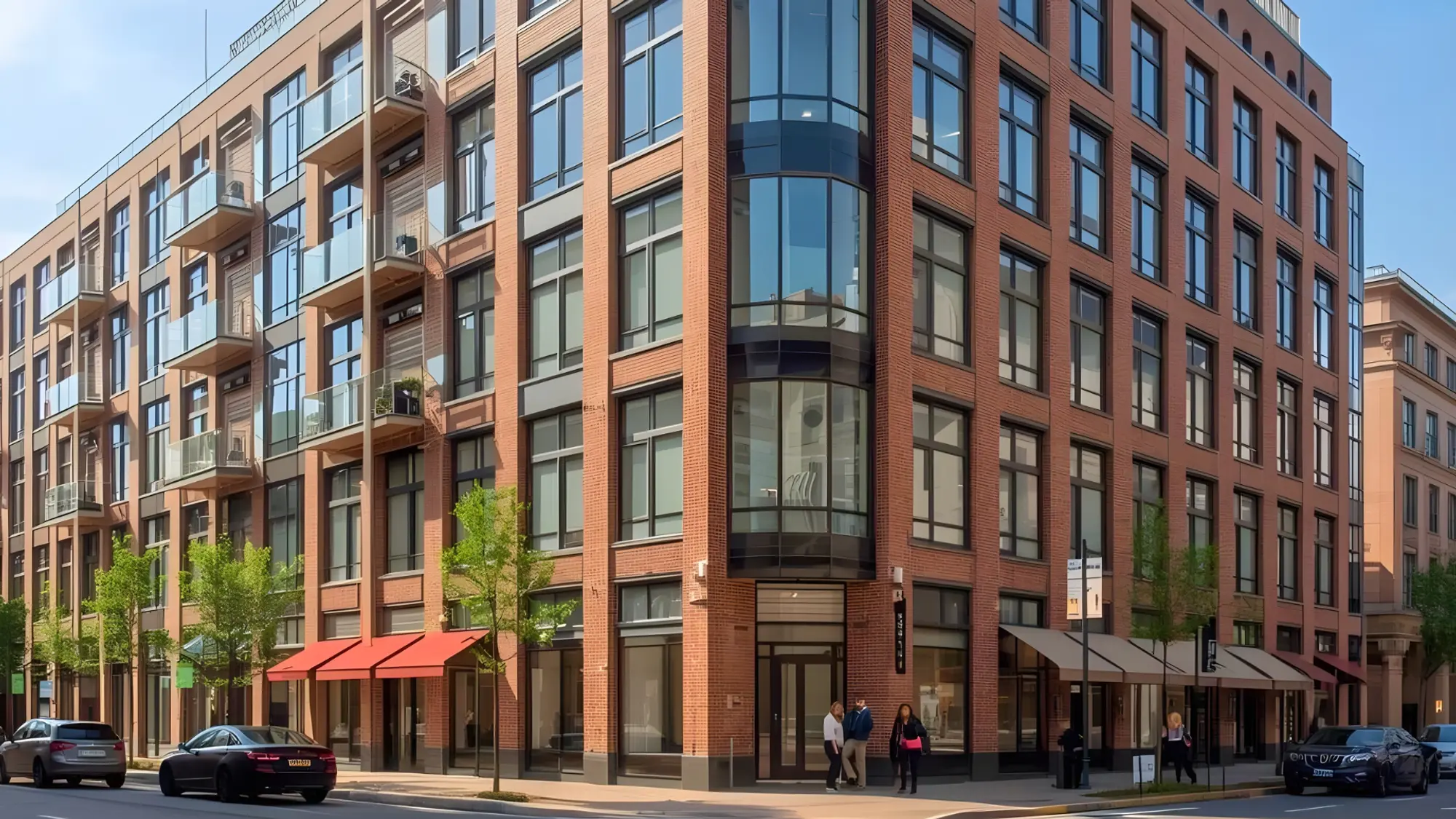
Multi-storey mixed-use building with ground-floor retail and upper-floor apartments

Get a Real Mixed-Use Property Quote

Mixed-use premiums depend on your specific configuration, construction and tenant activity. Speak to our specialist brokers for real pricing from our mixed-use insurer panel - not an online portal cap.

Expert Review: 18/04/2026

Verified by Tank Insurance Brokers

Call Us Now +61 2 9000 1155