
Contents
As an insurance brokerage, Tank Insurance’s team often speaks with owners of non-strata blocks of units.
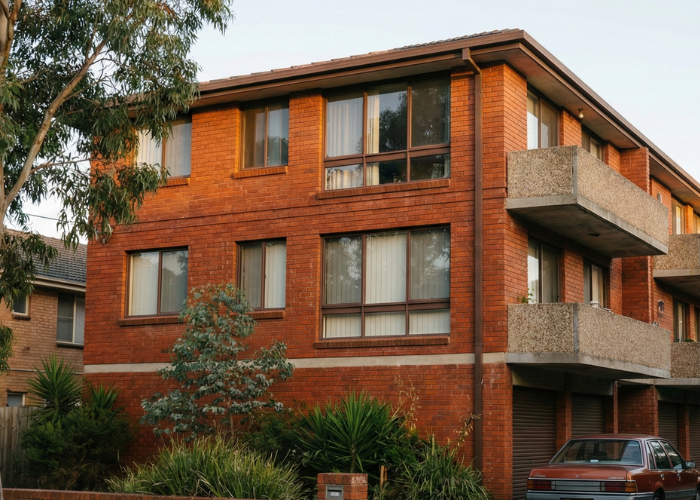
Non-strata block of units is a multi-unit residential property owned by a single entity on one title without a body corporate managing shared responsibilities. Unlike strata-titled buildings, where insurance is typically handled collectively, non-strata owners bear full responsibility for covering the entire building, common areas and tenancies.
Recently, our colleague Brady shared insights from the front lines of placing these policies. With premiums rising across the property insurance market in Australia, non-strata Block of Units Insurance is no exception.
Here’s a closer look at current trends, challenges and practical advice for owners.
Key Takeaways:
- Non-strata block owners bear full responsibility for insuring the entire building, common areas, and tenancies
- Use the ICA’s online calculators or get a professional valuation to avoid underinsurance
- Don’t overlook loss of rent, tenant default, and malicious damage cover - these are critical for multi-tenancy setups
- Providing electrical reports, clear claims history, and suburb flood data to underwriters can help negotiate better premiums
Current Market Trends for Non-Strata Block of Units Insurance
Premiums for non-strata blocks of units are increasing in line with broader rises in Australian property insurance.
Factors like extreme weather events, inflation in building costs and supply chain issues continue to influence rates as of late 2026.
From Brady’s perspective, the market is seeing some consolidation with major direct insurers occasionally declining or non-renewing certain risks. This has opened opportunities for specialist placements through brokers who access niche markets.
Key factors driving premium changes, beyond weather events, include:
- Location Risks: Properties in northern Australia face higher rates due to more frequent severe weather. Proximity to bushland also plays a role, increasing exposure to fire hazards.
- Lack of Maintenance: Visible signs of wear and tear, such as those evident in online photos of the property, can signal higher risk to underwriters.
- Building Age and Construction: Older buildings, particularly those with outdated materials or without recent rewiring, often attract higher premiums.
These elements make some non-strata blocks “hard-to-place” risks, especially if the building is older, located in higher-risk areas or has not had recent electrical upgrades.
Common Coverage Gaps in Standard Policies
Many non-strata owners initially consider a basic Landlord Insurance or Commercial Property Insurance policy. However, these can leave significant gaps, particularly in multi-tenancy setups.
One major issue arises when units within the same block are on separate titles but not insured under a single policy. Shared elements (e.g., walls between units, services or common areas) may not be fully covered, leading to disputes or shortfalls in claims.
Another assumption is that general policies adequately handle multi-unit specifics. Specialised Block of Units Insurance addresses these by ensuring comprehensive cover for the whole property under one ownership.
Avoiding Underinsurance in a Volatile Market
With ongoing volatility in construction and supply chain costs, underinsurance remains a concern for many non-strata blocks.
Rising material and labour expenses mean replacement values can quickly outpace older estimates.
Brady recommends using reliable tools to determine an accurate sum insured. The Insurance Council of Australia provides online calculators as a starting point for estimating rebuilding costs.
For multi-unit properties, consulting a professional valuer, builder or quantity surveyor ensures a more defensible figure that accounts for unique features.
Essential Coverages Often Overlooked in Multi-Tenancy
In multi-tenancy environments, certain risks go beyond standard building damage cover:
- Loss of Rent: Specialised policies cover rental income if the property becomes uninhabitable due to an insured event, including weekly rent payouts during repairs and tenant relocation costs.
- Tenant Default: This addresses situations where a tenant stops paying rent.
- Malicious Damage by Tenants: Repairs for intentional damage are covered up to limits outlined in the Product Disclosure Statement (PDS).
General policies may not include these as comprehensively, leaving owners exposed to income loss or repair expenses.
Presenting Your Property as a Strong Risk
To negotiate better premiums, owners can provide underwriters with documentation that demonstrates good management.
Brady notes underwriters particularly value:
- Electrical and plumbing reports, especially for older buildings.
- A clear claims history.
- Information on the suburb’s flood history.
These help position the property as lower risk.
Benefits of Specialist Placement Through an Insurance Broker
The non-strata market often requires access to exclusive schemes or niche underwriters.
As an insurance brokerage, we can place risks with providers offering broader options than direct-to-market policies.
For example, one insurer’s landlords package stands out for its comprehensive cover while another shows a wider risk appetite, accommodating more complex properties that might face declines elsewhere.
The Value of Broker Advocacy in Claims
When a major claim occurs, owners who purchase directly may face challenges navigating the process alone.
Having a broker like Tank Insurance act as an advocate can make a difference.
We prioritise placements with insurers known for efficient claims handling where streamlined processes often lead to stronger outcomes.
If you’re an owner of a non-strata block of units, whether a small duplex or larger complex, reviewing your insurance setup is worthwhile in the current environment.
Reach out to us at Tank Insurance for a discussion tailored to your property. You can call us through 02 9000 1155 or send an email at [email protected].
We’re here to help secure appropriate cover that fits your needs.